
Water Harvesting in the Garden: A Permaculture Overview
Swales, spillways, rain gardens, basins, tanks and mulch: a short overview of how a permaculture garden catches rain, slows it down and stores it in the soil.
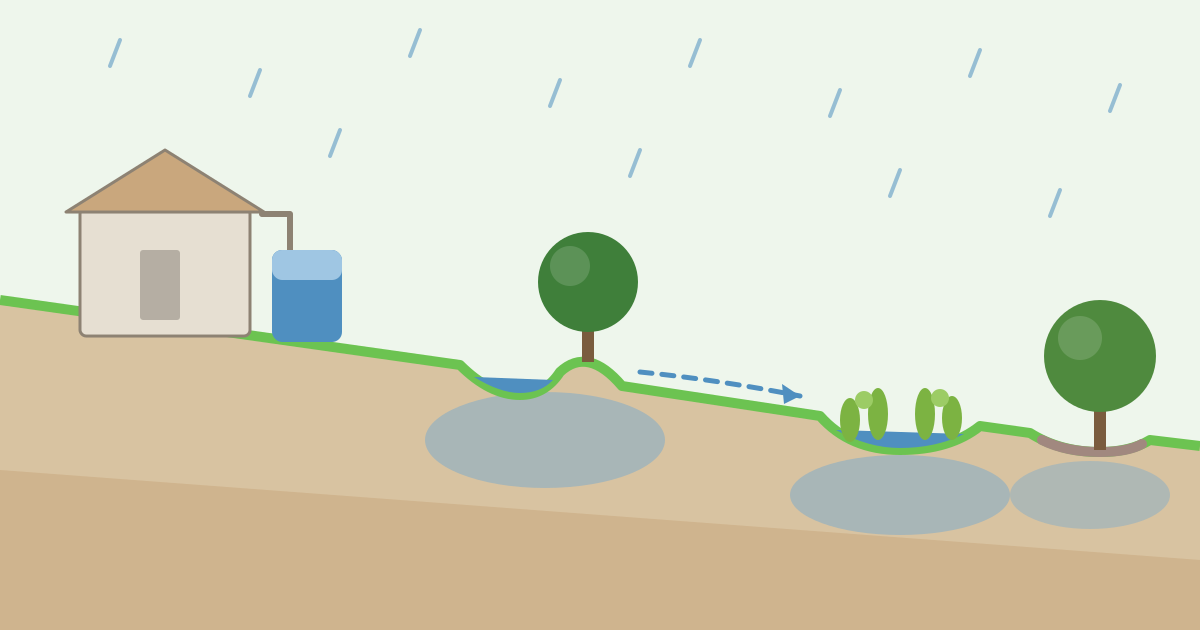
Water harvesting in a permaculture garden means catching the rain where it falls, slowing it down and letting it soak into the soil, instead of letting it run off the plot. The soil itself becomes the main storage tank, with swales, basins, rain gardens and mulch helping it fill, and a spillway making sure extra water leaves safely. Here's a short overview of the main tools and how they fit together.
The idea: slow it, spread it, sink it
Brad Lancaster, author of Rainwater Harvesting for Drylands and Beyond, sums up the approach in eight principles. The ones that matter most for a home garden:
- Watch first. Walk the garden in the rain and see where water runs, pools and disappears.
- Start at the top of the slope, where there is less water and it moves slower, and work your way down.
- Start small. Many small earthworks soak in more water than one big one, and you can build and fix them yourself.
- Spread and infiltrate. Make the water stop and soak in rather than rush off.
- Always plan an overflow route, and treat the overflow as a resource for the next part of the garden.
- Cover the ground with plants and mulch, so the soil keeps improving as a "living sponge".
The main tools
| Tool | What it does | Where it goes |
|---|---|---|
| Mulch and living soil | Lets rain soak in and keeps it from evaporating | Everywhere |
| Tank | Stores roof water for dry months | By the house, below the gutter |
| Swale | Catches water running down a slope | Across the slope, on contour |
| Spillway | Lets overflow leave safely | At the end of every swale or basin |
| Rain garden | Soaks up runoff from roofs and paving | A low spot, away from the house |
| Basin | Holds water around a tree or bed | Around trees, at the bottom of flows |
Mulch and living soil
The cheapest water store is soil rich in organic matter, covered with mulch or plants. Bare, crusted soil sheds water; covered soil soaks it up and loses less to the sun. Every other technique here works better when the soil is alive.
Tanks
A roof collects a surprising amount of water: every millimetre of rain on every square metre of roof gives about one litre. A 100 m² roof in a year with 500 mm of rain sheds around 50,000 litres. A tank stores part of it for the dry season, and its overflow pipe should lead to a swale, basin or rain garden, not to the street.
Swales
A swale is a shallow trench dug exactly level along the contour of a slope, with the dug soil piled into a mound (berm) on its downhill side. Water running down the slope collects in the trench and soaks slowly into the soil, feeding the trees planted on and below the berm. A swale is the most powerful tool on a slope, and also the one most worth doing carefully, so it has its own guide: how to build a swale and where to put the spillway.
Spillways
A spillway is the planned exit for water when a swale or basin is full. It's a wide, level section set slightly lower than the top of the berm, protected with stones or dense plants, so overflow leaves as a gentle sheet in a place you chose, instead of breaking through the berm somewhere you didn't. Without a spillway, the first big storm decides for you.
Rain gardens
A rain garden is a shallow, planted hollow that collects runoff from a roof, path or driveway. University extension guides say it should drain within a day or two (24–48 hours) after rain, and most say to keep it at least 3 metres from the house foundations. Test the soil first: dig a hole, fill it with water and see how fast it empties.
Basins
A basin is a shallow dip, often a ring around a tree, that holds water where the roots are. Basins are the small-scale version of an old dryland idea: in the northern Negev, KKL-JNF has used limans, small banked basins that collect runoff after rain, to grow trees where rainfall alone would not be enough.
Greywater
Water from showers and washing machines can water a garden, but the rules vary by country. In Israel, home greywater systems have long been restricted and need approval from the Ministry of Health, so check the current rules before installing one.
Putting it together
Think of water's path from the top of your plot to the bottom. Roof water fills the tank; the tank's overflow feeds the first swale; each swale's spillway feeds the next swale, a rain garden or a basin; and whatever still reaches the bottom of the plot soaks into a final basin or mulched bed. Every step slows the water down and gives the soil another chance to drink.
Planning water in Megumi Planner
Megumi Planner lets you draw gutters, tanks, swales, spillways, rain gardens and basins on your site plan, in the same plan as your zones and plants. Flow lines show which way water runs down the slope, and you can run a simulated rainstorm to watch where water flows and what fills up. It's a quick way to check that every swale has somewhere sensible to overflow before you start digging.
All the tools for fruit trees – spacing, drip rings and a planting layout – are on one page: the orchard planner.
Sources
- The Eight Rainwater-Harvesting Principles – Brad Lancaster, HarvestingRainwater.com
- How to Build a Swale in the Home Landscape – Amy Stross, Tenth Acre Farm
- Rain Gardens (G1758) – University of Nebraska–Lincoln Extension
- Rain Gardens, Chapter 5 – Alabama Cooperative Extension System, Auburn University
- Limans in the Negev (in Hebrew) – KKL-JNF
Keep reading
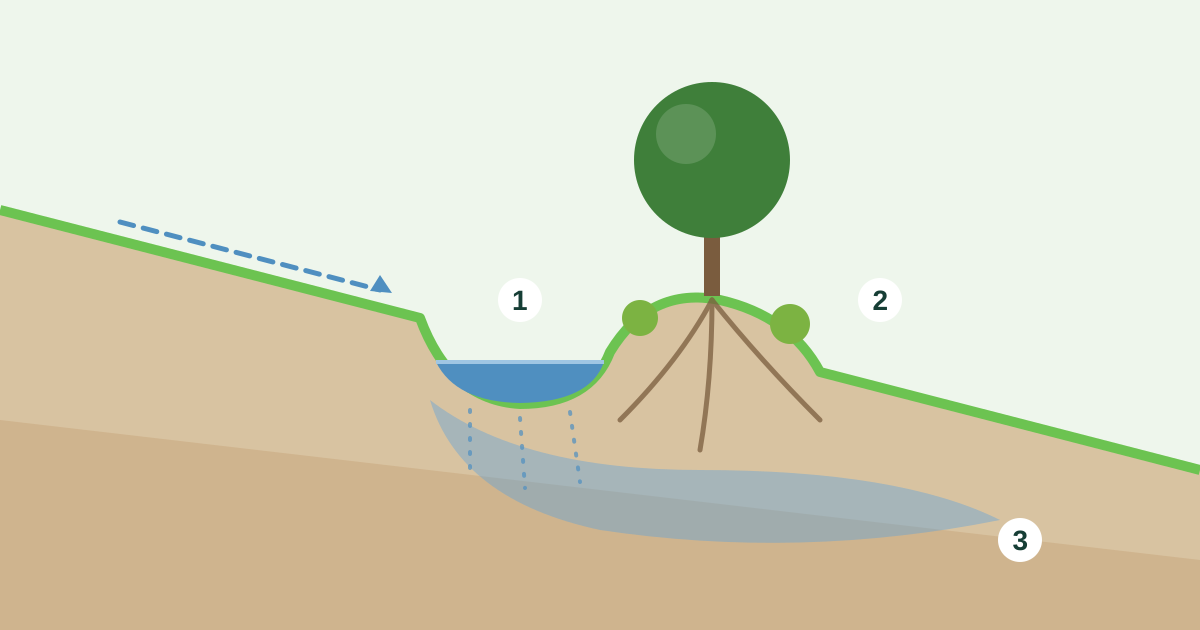
How to Build a Swale and Where to Put the Spillway
A step-by-step guide to building a swale on contour: checking the site, finding the level line, digging, planting, and placing the spillway so overflow is safe.
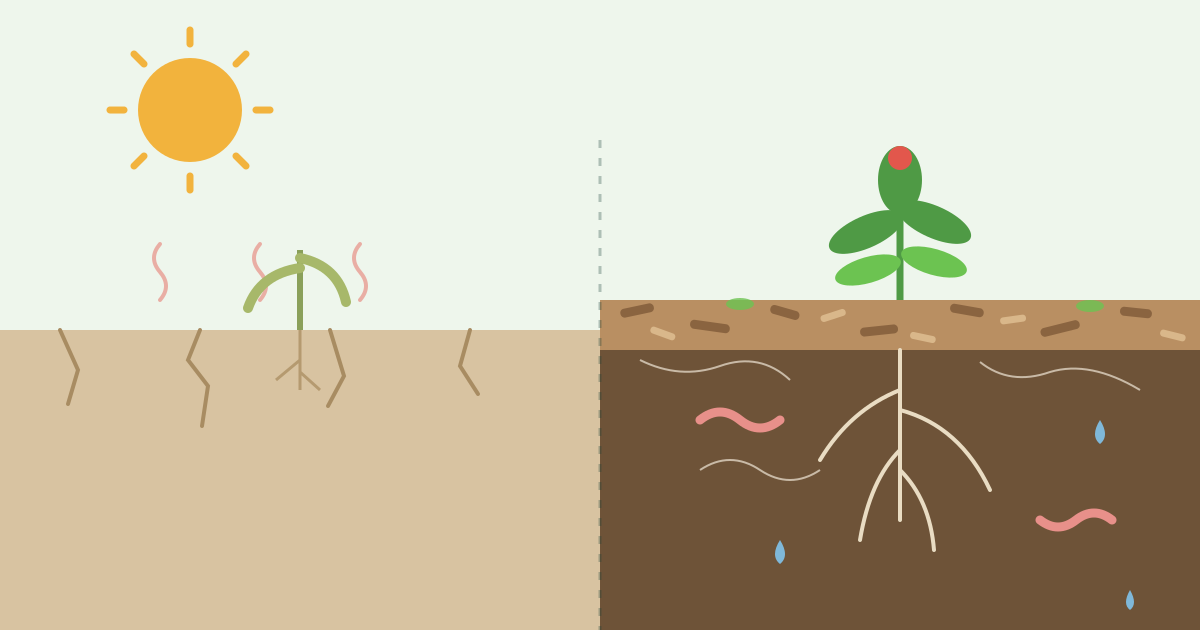
Mulch in the Garden: Why It Matters and How to Use It
Why mulch is the most useful thing you can do for garden soil, what the Back to Eden wood chip method teaches, which mulch to use where, and how deep to lay it.
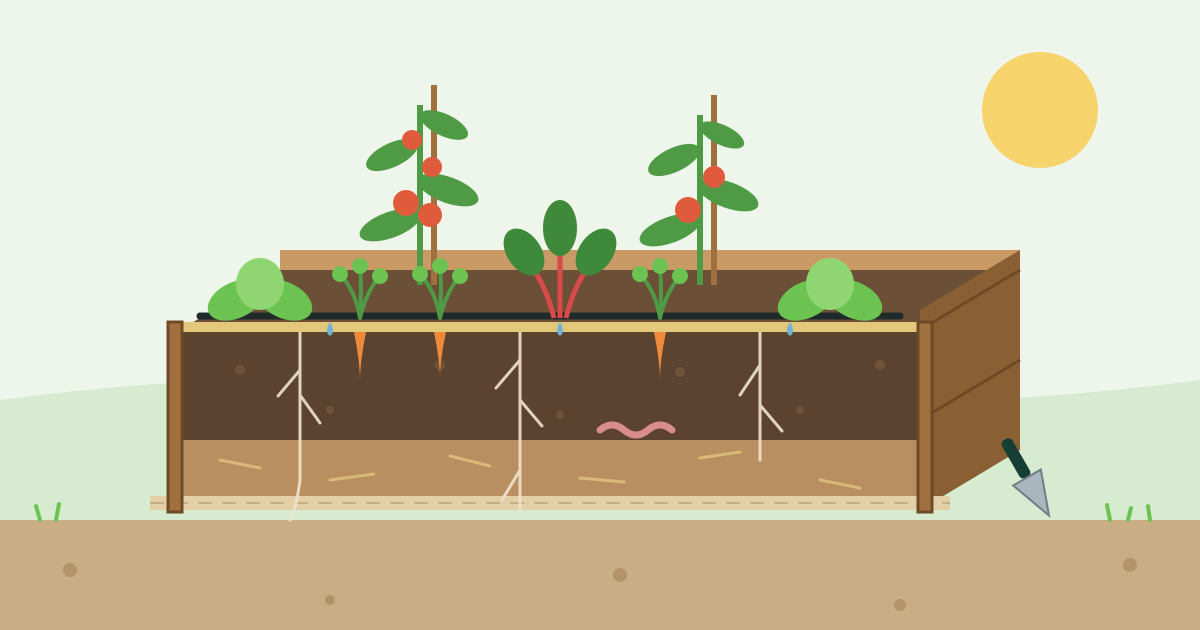
No-Dig Raised Beds: How to Build Them and Grow Vegetables
How to build a no-dig raised bed for vegetables: size, frame, cardboard and compost layers, planting without digging, feeding, weeds and drip in hot summers.