
Mulch in the Garden: Why It Matters and How to Use It
Why mulch is the most useful thing you can do for garden soil, what the Back to Eden wood chip method teaches, which mulch to use where, and how deep to lay it.
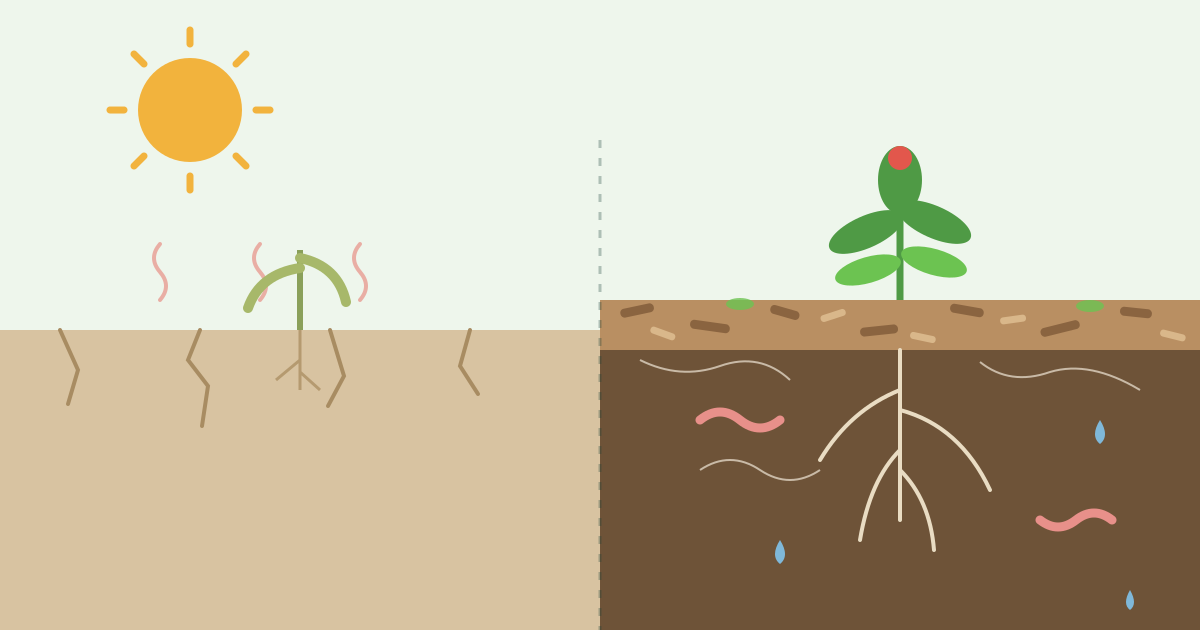
Mulch is any layer of material spread over the soil surface, such as wood chips, straw, leaves or compost. It is one of the simplest and most useful things you can do in a garden: it keeps the soil moist and cool, smothers weeds, protects the soil from sun and heavy rain, and, as it breaks down, feeds the soil life that feeds your plants. Bare soil is rare in nature. In a forest, the ground is always covered by fallen leaves and twigs, and mulching copies that.
What mulch does for your garden
- Holds water. Mulch shades the soil and slows evaporation from the surface. In one field study, a straw mulch cut evaporation from a loamy soil by about a quarter. The exact saving depends on the soil, the mulch and the climate, but every source agrees on the direction.
- Keeps the soil cool. Bare soil in the summer sun gets very hot, and so do the roots in it. In the same study, mulch narrowed the daily temperature swing 5 cm below the surface from 17.5 °C to 11.5 °C.
- Suppresses weeds. A thick layer blocks light from weed seeds in the soil, and any weeds that do sprout in loose mulch pull out easily.
- Protects the structure of the soil. Rain falling on bare soil breaks up its crumbs and forms a hard crust that water then runs off. Under mulch, rain soaks in gently.
- Feeds soil life. Worms, fungi and bacteria break the mulch down into humus, which improves the soil and slowly releases nutrients. Wood chips in particular encourage the fungi that many trees and shrubs depend on.
- Reduces salt build-up. In dry regions, water evaporating from bare soil leaves salts behind on the surface. Less evaporation means less salt, a point Israel's Ministry of Agriculture has made about wood chip mulch in irrigated gardens.
Back to Eden: gardening under wood chips
The wood chip method known as Back to Eden became famous through a 2011 documentary of that name about Paul Gautschi, a gardener in Sequim, in Washington State. He began by covering the ground in his orchard with arborist wood chips, which are chipped tree trimmings with their leaves, and later did the same in his vegetable garden. The film shows a no-dig garden that he says needs almost no watering or weeding, and it led many thousands of gardeners to try wood chips.
The film's producers have since written about common misunderstandings, and their own guides add a lot of detail that's easy to miss:
- The orchard and the vegetable garden are treated differently. Under the fruit trees, Gautschi spreads a thick layer of fresh arborist chips; the producers mention 30–40 cm when the orchard was first covered. In the vegetable garden, he uses chips that have already composted and been screened, raked to only about 5 cm.
- Fresh chips stay on top. Don't dig or till chips into the soil, because that does tie up nitrogen. Plant seeds and seedlings into the soil or compost below, pulling the raw chips aside, not into the chips themselves.
- Start in autumn. That gives the layer a season to settle and start breaking down before spring planting.
- The garden took years. When the film was made, the vegetable garden had been mulched for about 15 years, and the orchard for about 30. A new bed won't look like that in its first season.
- Feed the first year. In a demonstration garden laid on fresh chips, the plants showed nitrogen deficiency, which the producers fixed with an organic nitrogen fertiliser. They recommend composted manure each year when starting out.
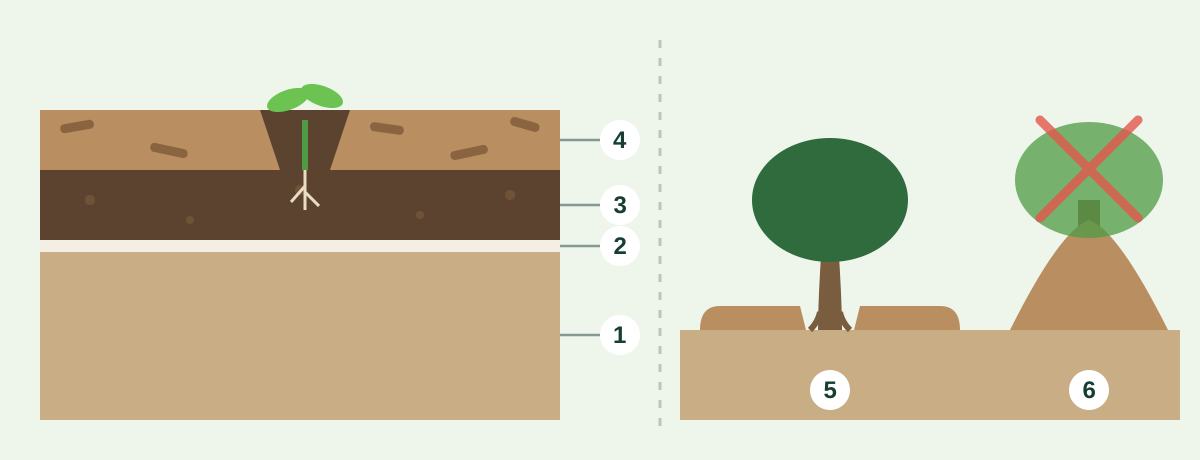
Their recipe for a new vegetable bed is simple: 3–4 sheets of newspaper or cardboard on the soil or grass, then 7–10 cm of compost or composted manure, then 5–10 cm of wood chips or another mulch on top.
Does it work in a hot, dry summer?
Sequim lies in a rain shadow and gets only about 400 mm of rain a year, less than Tel Aviv. But its summers are cool and mild. In Israel, six rainless months with temperatures over 30 °C are a very different test. Mulch helps here even more than in a cool climate, because evaporation from bare soil is so high. But expect to keep irrigating most garden plants in summer, especially vegetables. The claim that a mulched garden never needs watering comes from one gardener in a mild climate, and hasn't been measured independently. Run drip lines under the mulch, so the water goes straight into the soil and the mulch keeps it there.
Wood chips and nitrogen: what the research says
The most common worry about wood chips is that they "steal" nitrogen from the soil. Linda Chalker-Scott, a horticulture researcher at Washington State University, reviewed the research and found that this happens mainly when chips are mixed into the soil. Chips left on the surface only take up nitrogen in the thin layer where they touch the soil, and over time, as they break down, they add nutrients rather than removing them.
That thin layer is where seeds germinate and small seedlings root, which is why vegetable beds do better with compost or a finer mulch such as straw on top, and why the Back to Eden garden uses composted chips. Trees, shrubs and established perennials, with deep roots, aren't affected.
The same reviews found little evidence for other common worries: chips from diseased trees didn't infect healthy plants when used as surface mulch, mulch didn't noticeably change soil pH, and termites tend to avoid wood chips. Back to Eden's guides advise against walnut and eucalyptus chips; the research reviews found no reliable evidence of harm from walnut or cedar chips used as mulch. If you're not sure, use those chips on paths.
Which mulch to use where
| Mulch | Best for | Notes |
|---|---|---|
| Fresh arborist wood chips | Around trees and shrubs, paths, food forest areas | Often free from tree trimmers or the local council; lasts 2–3 years |
| Composted or aged wood chips | Vegetable beds, perennial beds | Plant straight into them |
| Straw | Vegetable beds, around tomatoes and squash | Use straw without seeds; hay brings weed seeds |
| Fallen leaves | Everywhere; shredded for vegetable beds | Free each autumn; whole leaves can mat |
| Compost | Vegetable beds, under other mulches | Feeds more than it covers; topped up yearly |
| Grass clippings | Thin layers around vegetables | Lay no more than 2–3 cm at a time, or they turn slimy |
| Cardboard | Under mulch, to kill grass or weeds | Remove tape and plastic; it rots within a season |
| Living mulch | Between trees and in beds | Low plants such as clover or creeping thyme; see plant guilds |
Gravel and stones are mulch too. They don't feed the soil, and in the sun they store heat and give it off at night, but they are the right choice next to the house in areas with fire risk (see below). Plastic sheeting keeps water from soaking in and breaks down into fragments, so it is a poor choice for a living garden.
How to mulch, step by step
- Water first. Mulch keeps soil moist, so it should start moist. In Israel, autumn after the first rains is the ideal time.
- Clear the weeds, or lay wet cardboard over them.
- Spread the mulch. About 5 cm of fine mulch in vegetable beds; 7–10 cm of wood chips around trees and shrubs and on paths. Research on arborist chips found that at least 10 cm is needed to stop most weeds.
- Leave a gap around stems and trunks. Keep mulch a hand's width away from the trunks of trees and the stems of plants, so the root flare at the base of the trunk stays visible. Mulch heaped against a trunk keeps the bark wet and invites rot.
- Top it up. Mulch keeps breaking down, which is what it's for. Add more once a year, usually in autumn.
To work out how much you need, multiply the area by the depth: 10 m² at 10 cm deep takes 1 m³ of wood chips, roughly a small trailer load.
Mulch and water harvesting
Mulch is the last step of catching rain. Swales and basins slow water down and let it soak in; mulch keeps it in the soil for weeks instead of days. Fill swales and the basins around trees with wood chips, and they become sponges. Read more in water harvesting in the garden. In a raised bed, such as a square foot garden, a thin mulch between plants makes a big difference in a hot summer.
Planning mulch in Megumi Planner
In Megumi Planner you can draw the beds, paths and tree circles on your site plan to scale, so you can see how big an area you need to mulch and work out how many cubic metres to order. The sun and shade view shows which areas get the most summer sun, where mulch saves the most water, and you can plan the drip lines that run under the mulch.
All the tools for fruit trees – spacing, drip rings and a planting layout – are on one page: the orchard planner.
Frequently asked questions
Should I mulch in winter or summer?
Both. The ideal time to lay mulch in Israel is autumn, after the first rain has wet the soil. Top it up in spring before the heat, so the soil is covered all summer.
Will mulch attract snails and slugs?
It can give them shelter in a wet winter. Keep mulch thinner around young seedlings, and check under it in the evening.
Where can I get wood chips?
Tree trimming companies and many local councils give away chips from pruning, often for free. Ask for chips without large logs.
Can I use pine needles?
Yes. They are a good, airy mulch, and the research shows they don't make the soil acidic in any meaningful way. They are flammable, so keep them away from the house in fire-prone areas.
Sources
- Back to Eden film – the documentary's official site
- How to Grow a Back to Eden Garden – Back to Eden
- How to Mulch a Garden – Back to Eden
- The Truth About Back to Eden Gardening – Back to Eden, 2020
- Myths of Mulch – Ben Faber, University of California Cooperative Extension, 2019
- Using Arborist Wood Chips as Landscape Mulch – Linda Chalker-Scott, Washington State University Extension
- Maddening Mulch Myths – The Garden Professors
- Effect of Mulch on Soil Moisture, Temperature and Heat Flux – Iranian Journal of Soil and Water Research, 2020
- Mulch and fire – UC ANR Fire Network
- Beware of Volcano Mulching – University of Florida IFAS Extension
- חיפוי קרקע בגינת הנוי – Israel Ministry of Agriculture (Hebrew)
Keep reading
The Soil Food Web: How to Bring Your Garden Soil to Life
What the soil food web is, what Elaine Ingham taught about soil biology and where her ideas are debated, and ten things you can do to grow healthier soil life.
Korean Natural Farming (KNF): DIY Natural Fertilizers
What Korean Natural Farming is, how its homemade ferments are meant to support plant growth and health, what the research shows, and how to make them at home.
Syntropic Agroforestry: A Beginner's Guide for Gardens
What syntropic agroforestry is, how its strata, succession and pruning work, how to start a syntropic row at home, and how to adapt it to a hot, dry summer.