
Backyard orchard planner: fruit tree spacing and layout
Plan a backyard orchard on a scale plan of your plot. Place every fruit tree at the spread it will reach when grown, check the spacing between trunks, and see where the trees will cast shade in summer and in winter. Give each one a drip ring, then print a numbered planting plan with the distances marked.
Start planning – free Free plan, free forever. No card needed.
Trees at their mature size
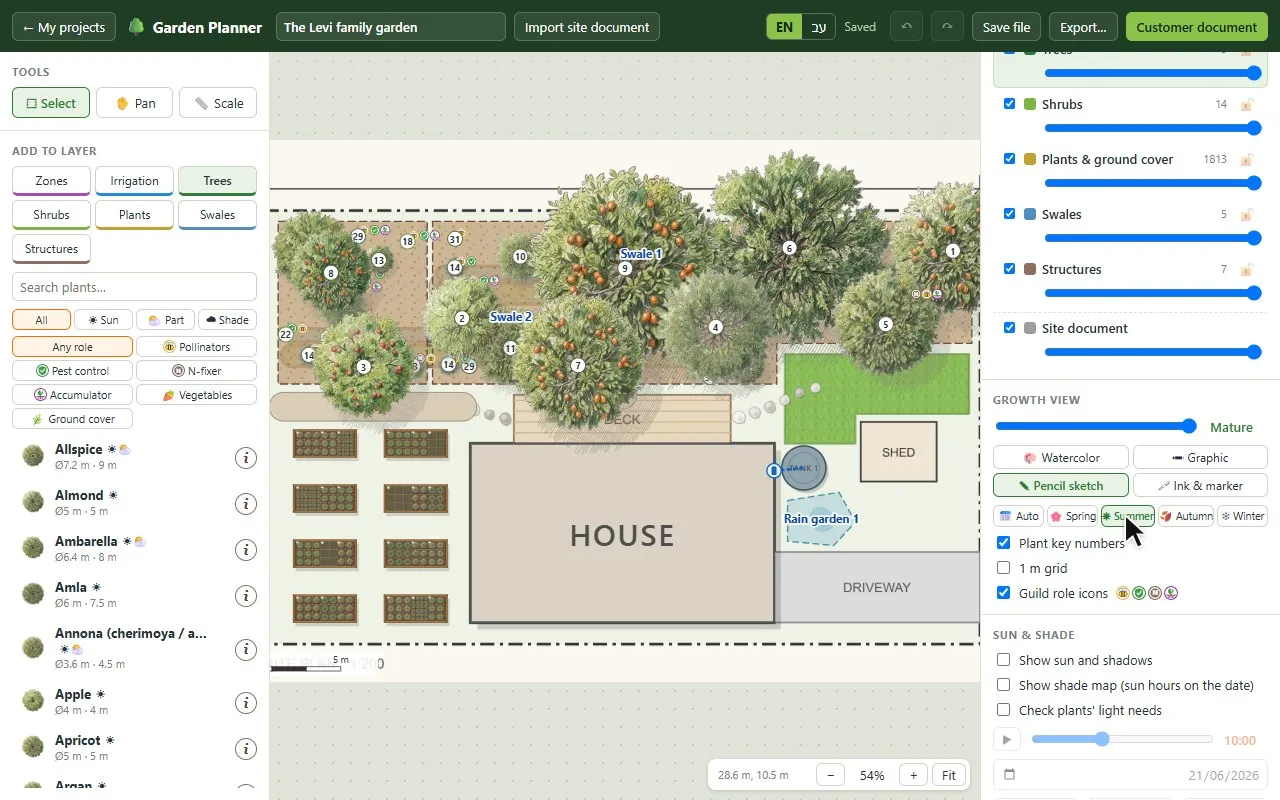
Each tree is drawn with a dashed circle at its mature spread, so a young sapling already takes the space it will need. Pick fruit and nut trees from the plant library – apples, pears, plums, figs, citrus, olives and many more – and set where the garden is: every tree is checked against the local climate, including the winter chill it needs to fruit.
A spacing check as you plant
Two trees closer than 3.5 m, or two shrubs closer than 2 m, trunk to trunk, get an orange ring and a dashed line with the distance, and are listed in the design summary. Planting dwarf trees or a hedgerow? Change both minimums to suit your rootstocks.
A planting layout with distances
Every tree gets its own number on the plan and in the plant schedule. The planting layout adds dimension lines from each tree to its two nearest trees and to the nearest wall, fence or building, so whoever plants knows exactly where each hole goes. It is on two pages of the Garden plan document and in the view-only link.
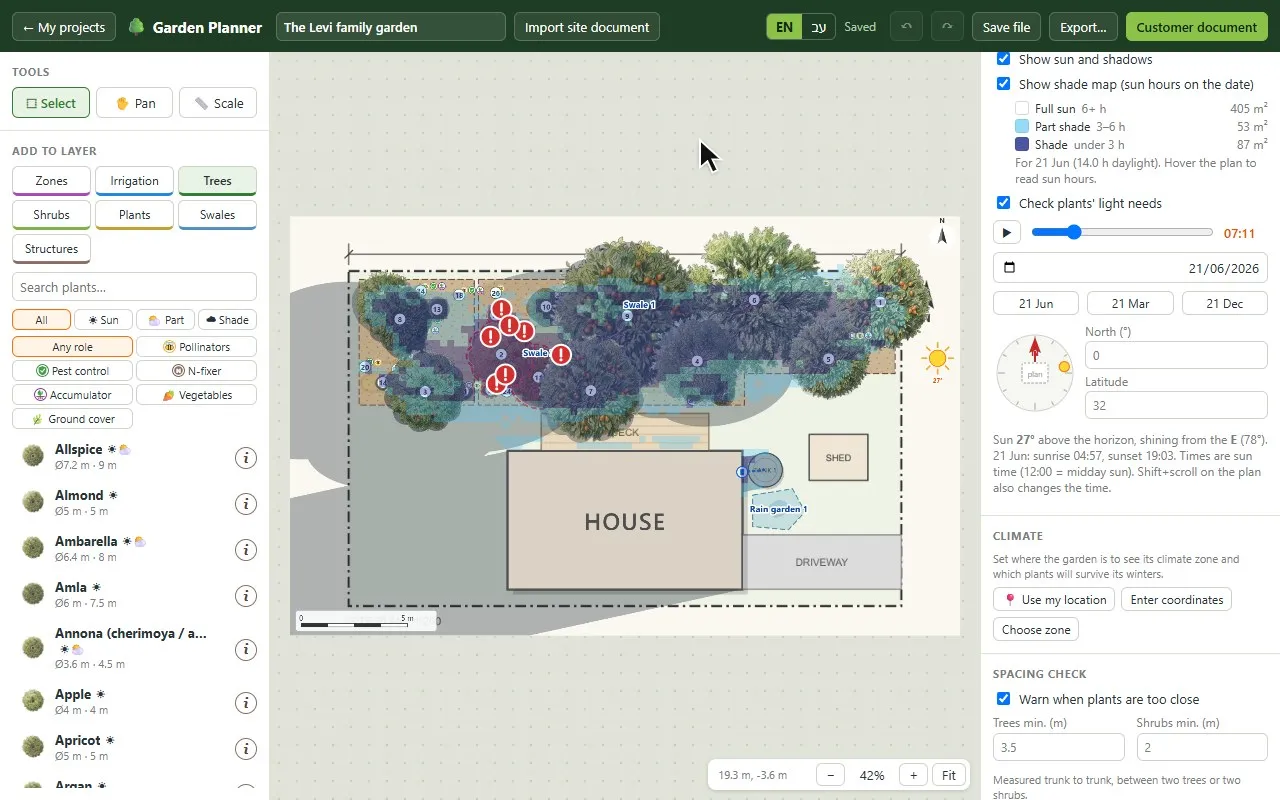
Sun and shade through the year
Set the date and move the sun across the day: each tree casts a shadow from its real height. The shade map shows which part of the plot gets full sun, so the trees that need the most light get it, and you can see how much a row of trees will shade the house or the vegetable beds.
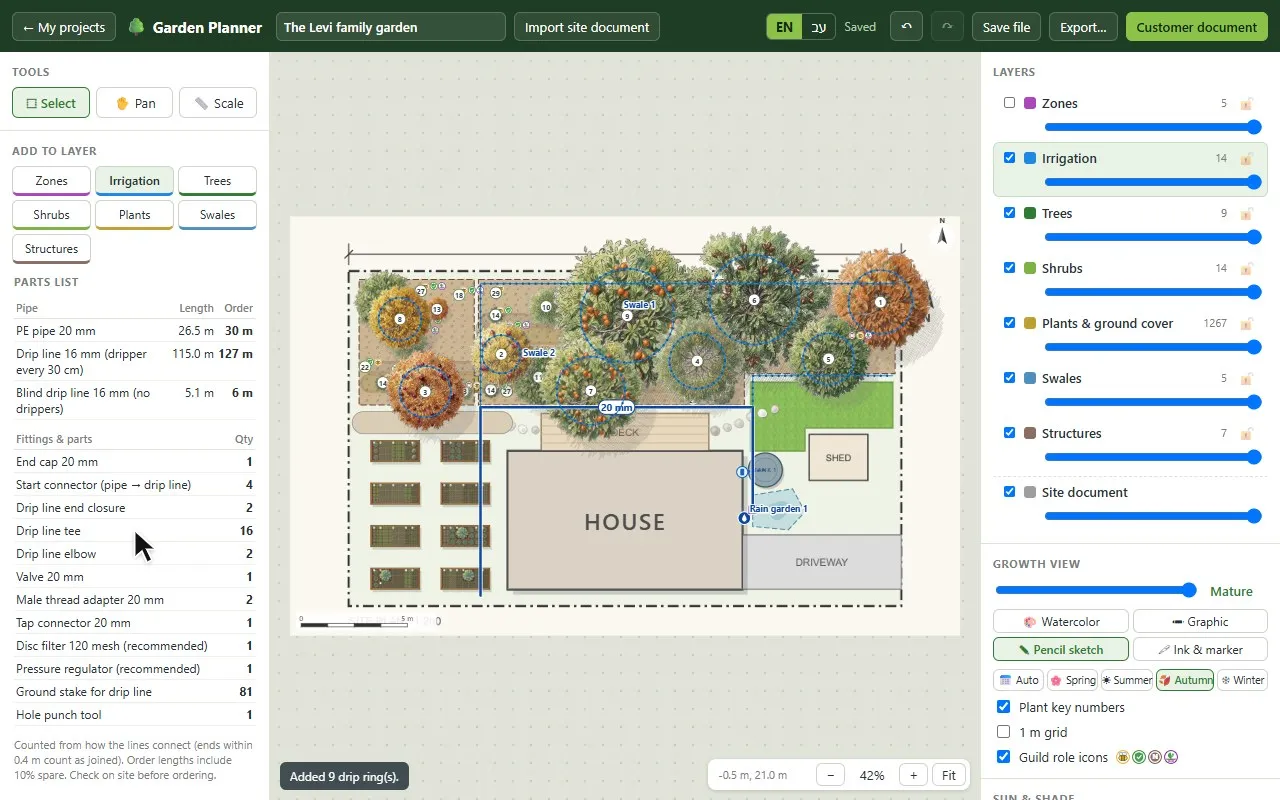
Drip rings in one click
Add a drip ring to every tree at once, connect them to a main line, and get a parts list with pipe lengths and every fitting. Lines snap to each other, and rings that are not connected yet are listed as warnings.
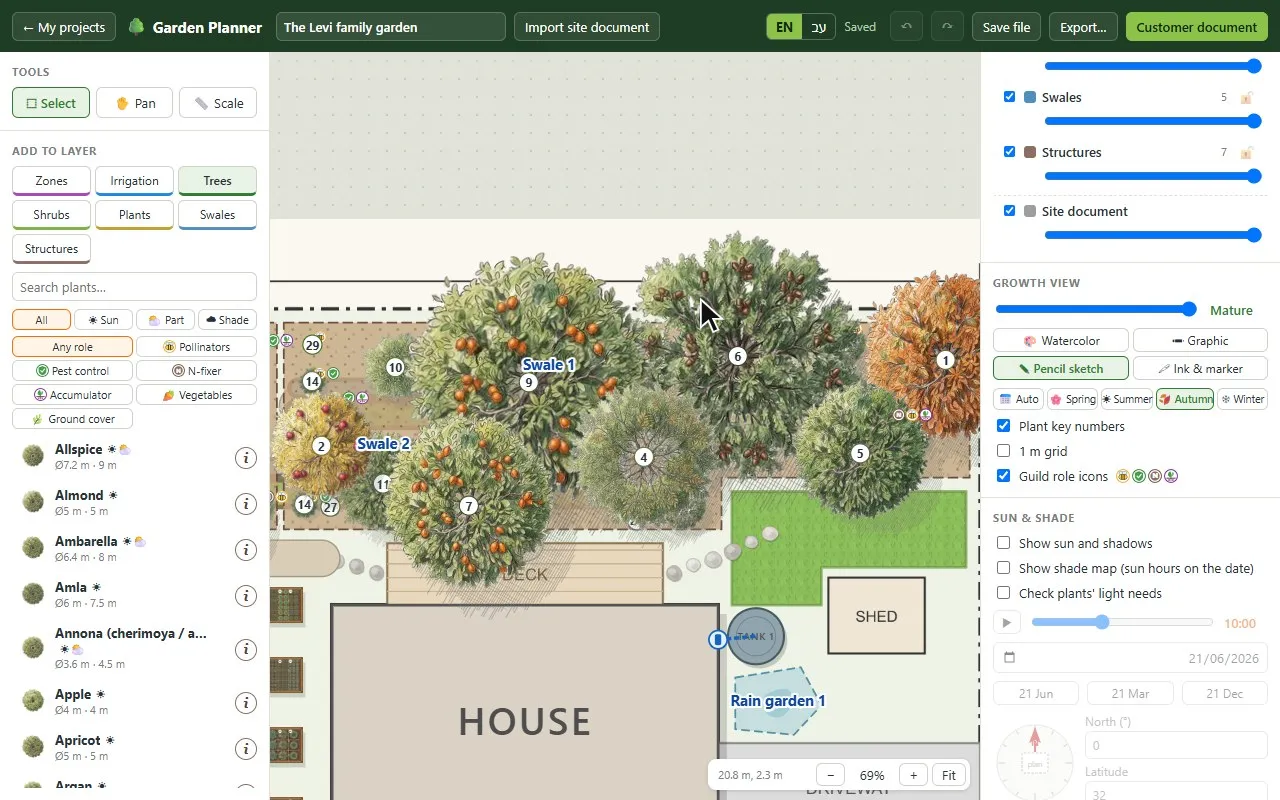
Year 1, 5 and 10
Move the Growth view slider to see the orchard from the year of planting to maturity, and switch seasons: blossom in spring, fruit in its own season, bare branches in winter to plan the pruning. Add a guild of herbs and ground cover under each tree, or swales on a slope, when you are ready.
How far apart? Try the spacing calculator
Pick a fruit tree and its rootstock, enter the size of your plot, and see the spacing between trees and rows and how many trees fit in square or offset rows – before you start the plan.
How it works, in four steps
- Bring in the plot – a site plan, an aerial photo or a Google Earth outline – and set it to scale.
- Mark the house, fences and paths, and turn on the sun to see the shade they cast.
- Place the fruit trees: the spacing check shows any that are too close.
- Add drip rings, look at the orchard in year 10, and print the planting layout with its distances.
Questions about orchard layout
How far apart should fruit trees be planted?
It depends on the rootstock and the variety. As a rough guide: standard apple, pear or cherry trees 6–8 m apart, semi-dwarf 4–5 m, dwarf 2.5–3 m; citrus 4–6 m; figs and olives 5–7 m unless you keep them small by pruning. Check the label or the nursery for your trees. The planner draws each tree at its mature spread and flags trees closer than 3.5 m by default.
How many fruit trees fit in a backyard?
On dwarf rootstocks, a plot of 10 × 10 m holds about six to nine trees with paths between them; with full-size trees, three or four. Espaliers along a fence or a close-planted fruit hedge fit more.
Which way should orchard rows run?
North–south rows give both sides of each tree an even share of sun. On a slope, plant across it, along the contour, so rain soaks in instead of running off – the planner’s contour lines and swales help you lay rows level.
What should I plant under fruit trees?
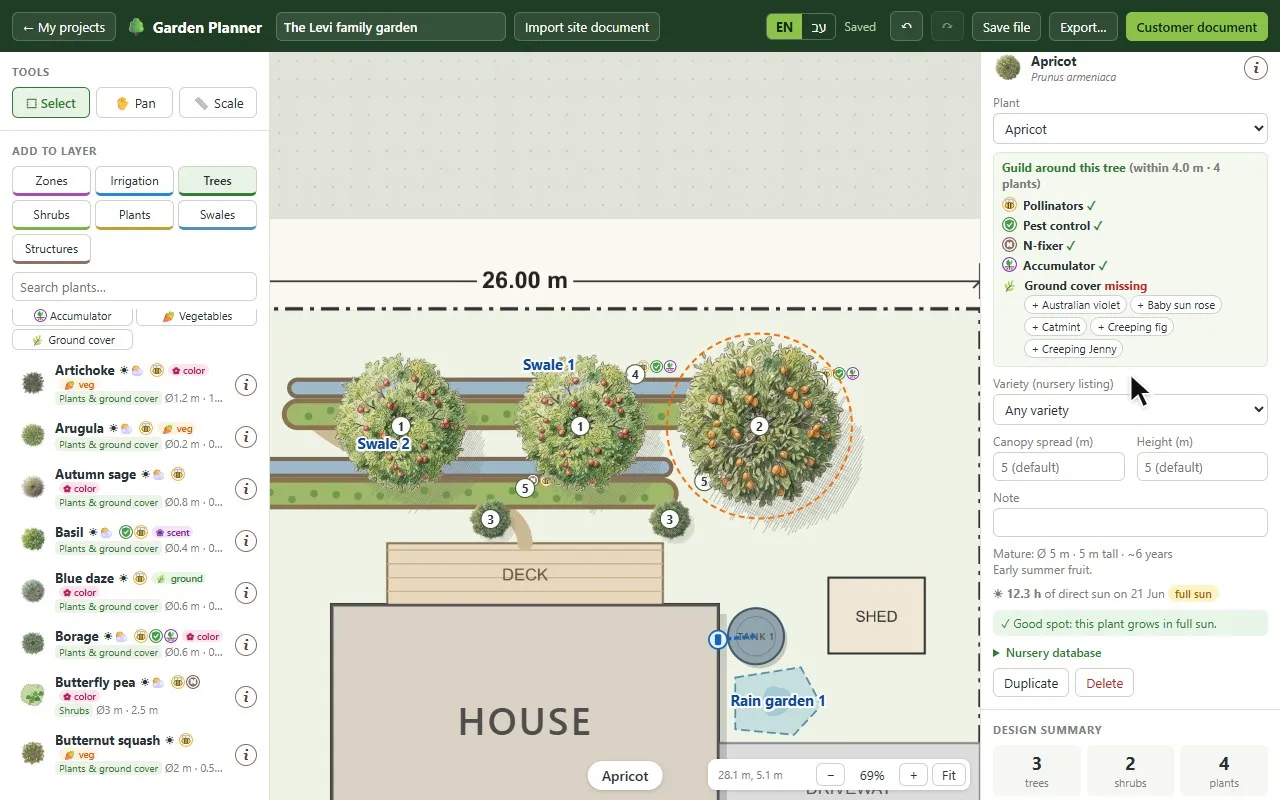
Herbs and flowers that bring pollinators and pest-eating insects, low ground cover, and a nitrogen fixer or two – together they make a guild. Keep grass away from the trunk and mulch the root zone. Select a tree in the planner to see which guild roles it is still missing.
Do chill hours matter?
For most deciduous fruit, yes: apples, pears, cherries and many plums need a certain number of cold winter hours to flower and fruit well. Once the garden’s location is set, the planner compares each tree with the local winter chill and warns when there is too little.
Further reading on the blog
Planning a different kind of garden?
Plant the orchard on the plan first
Moving a tree on the plan takes a second; moving it in ten years takes a chainsaw. Lay out your orchard now and plant with confidence.