
Food forest design: plan a food forest in layers
A food forest is a garden built like a young woodland: fruit and nut trees on top, then smaller trees, berry bushes, herbs, ground cover, climbers and roots, each layer helping the others. Megumi Planner lets you design one on a scale plan of your own land. See which layers you have covered, build a guild around each tree, and watch the forest grow from the first year to maturity.
Start planning – free Free plan, free forever. No card needed.
Seven layers at a glance
Canopy, sub-canopy, shrubs, herbaceous plants, ground cover, climbers and roots: the design summary shows which of the seven layers your plan already has and which are still empty. Every tree and shrub is drawn at its mature spread, so you leave the right gaps from the first day.
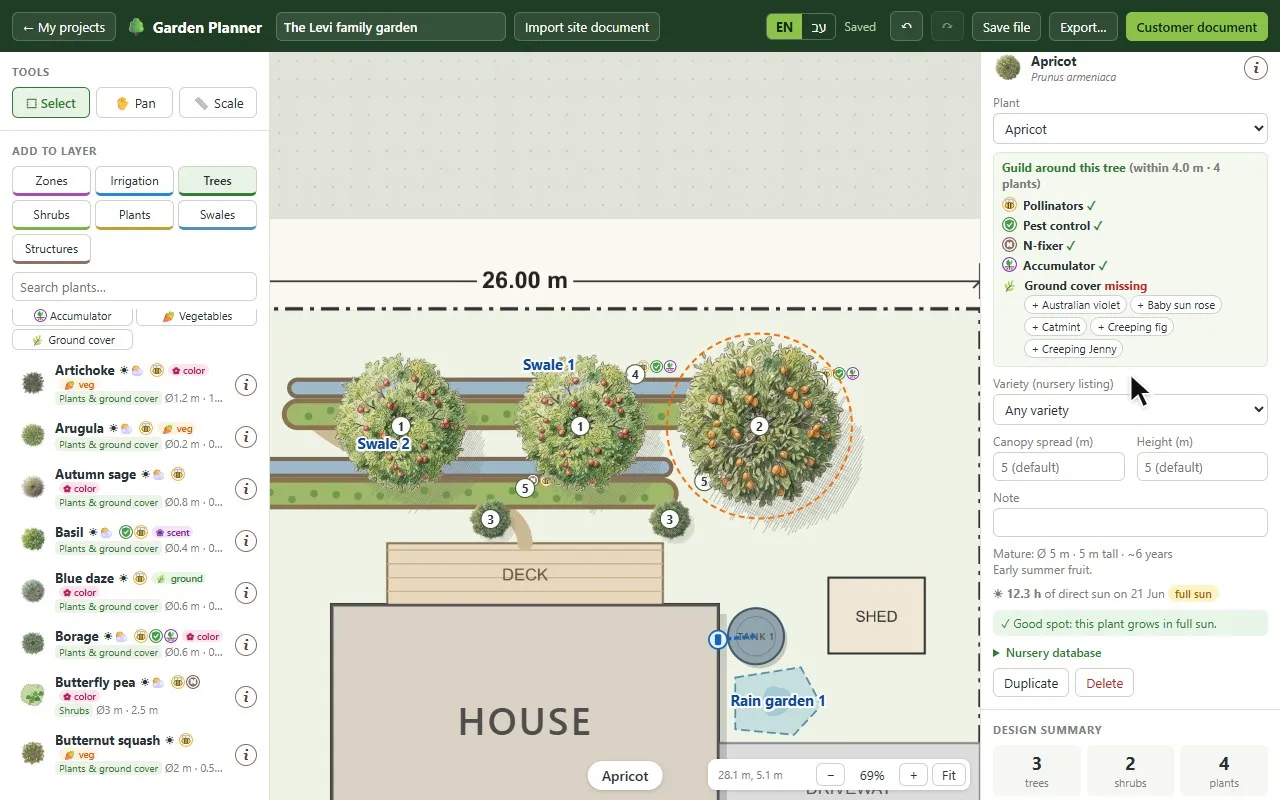
A guild around every tree
Each plant carries its guild roles – nitrogen fixer, pollinator plant, pest control, nutrient accumulator for chop-and-drop mulch. Select a fruit tree and the planner shows which roles are already around it and suggests plants for the missing ones, one click each.
Plant a whole bed at once
Draw a mulch bed, choose the forest garden style and click Plant this bed. The planner places as many trees as the light allows, shrubs along their drip lines, guild herbs at their edge and loose ground cover. It picks neighbouring trees from different families, so pests and diseases don’t jump between them, and gives fruit trees nut or nitrogen-fixing neighbours. Don’t like the result? Click again for another layout.
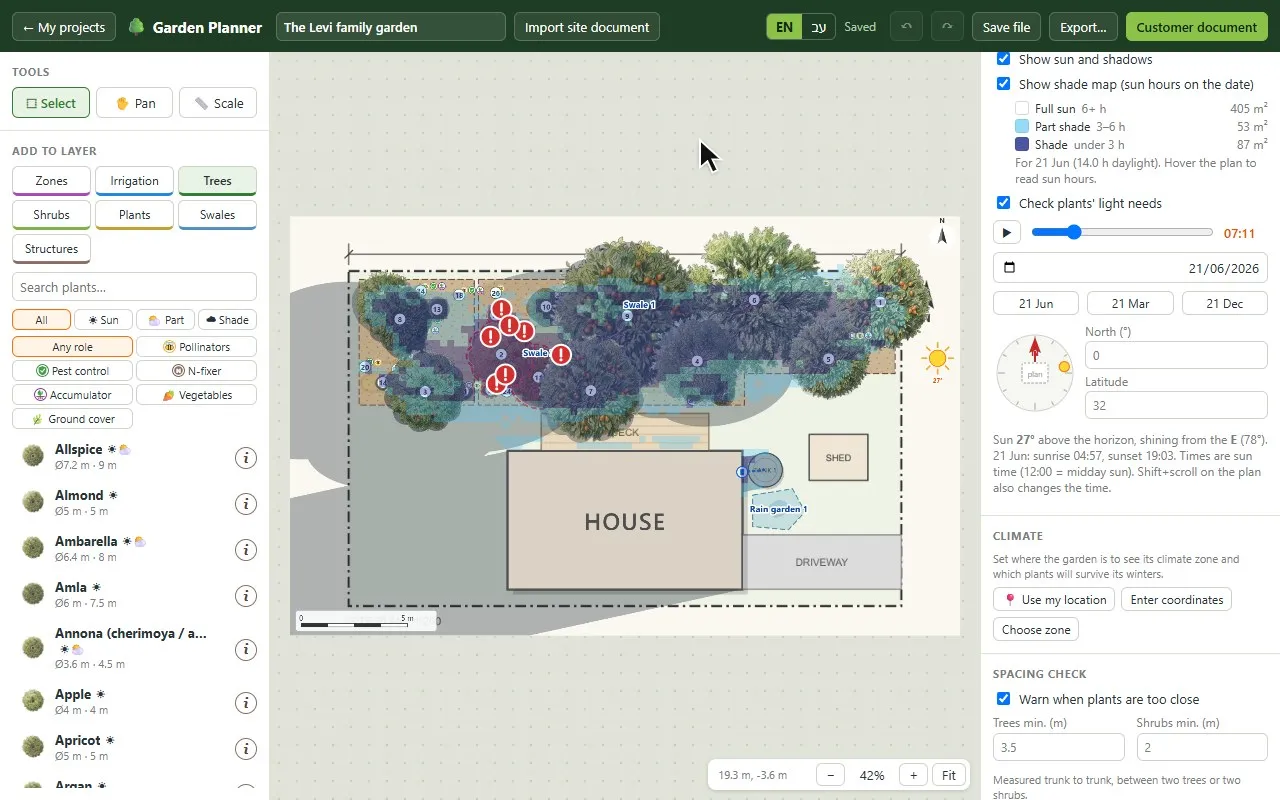
Light under the canopy
Every tree’s height drives its shadow. Move through the day and the year to see what the canopy will shade, and the light check warns when a sun-loving shrub ends up under a tree. Deciduous trees cast only light shade in winter, and the shadows follow.
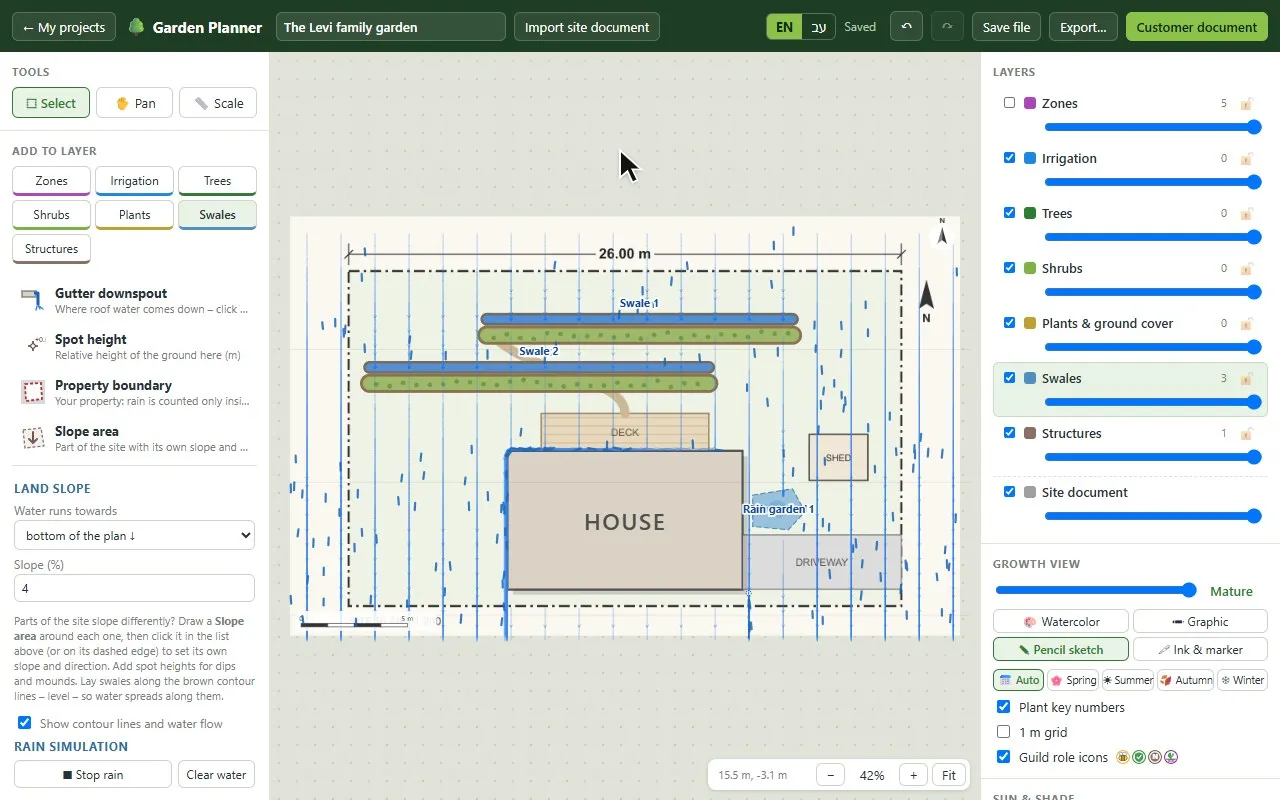
Swales and a rainstorm
Set the slope of the land, lay swales on contour and start a rainstorm: drops run downhill, swales fill and overflow, and a live tally shows how much water was caught, soaked in or lost. A young food forest on a dry slope needs every drop.
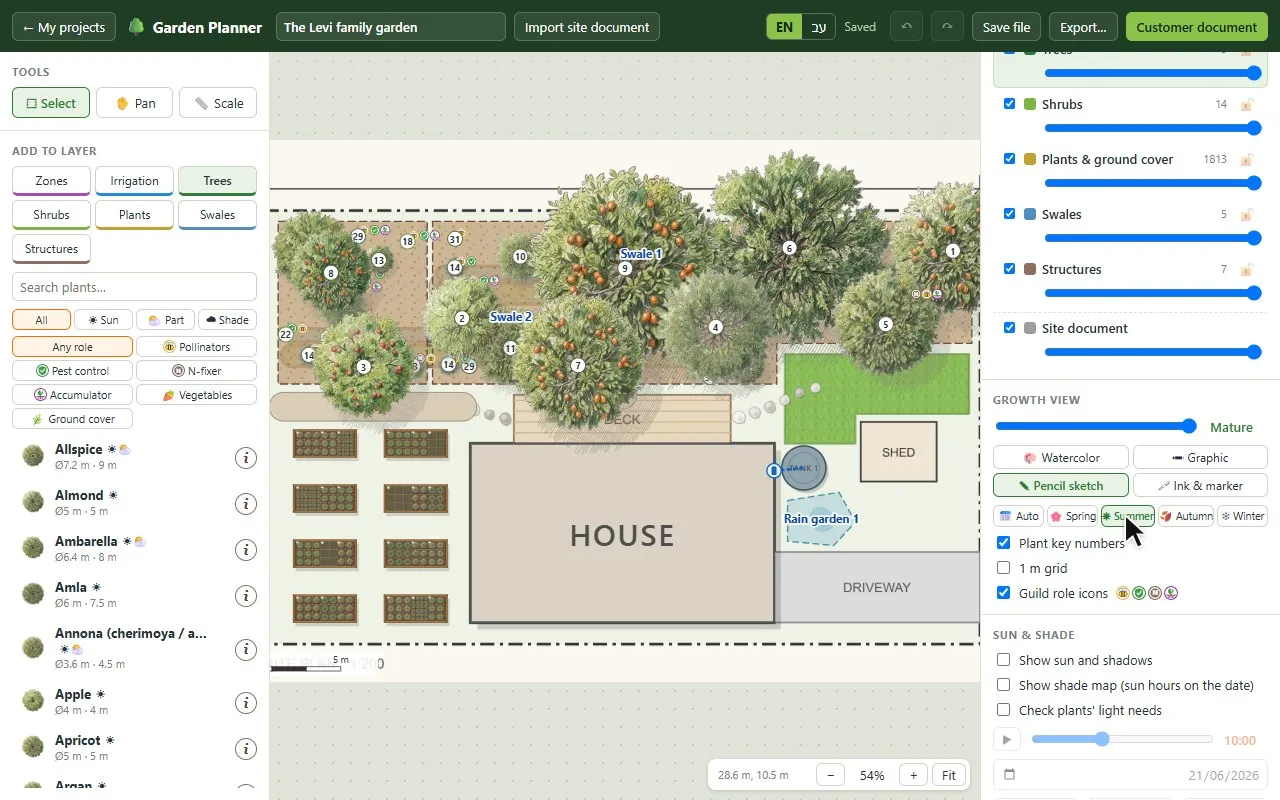
Watch it grow
Move the Growth view slider from the year of planting to maturity, and switch seasons to see blossom, fruit and bare winter branches. The Garden plan document adds a food forest page that explains the layers, ready to print.
How to design a food forest, in four steps
- Bring in the plot and mark the house, fences, paths and the way the land slopes.
- Place the canopy and sub-canopy trees at their mature size, leaving room for light between them.
- Build a guild around each tree – or plant a whole bed at once with the forest garden style.
- Add swales and drip rings, move the growth slider to year 10, then print or share the plan.
Questions about food forests
What is a food forest?
A food garden designed like the edge of a woodland: several layers of edible and useful plants growing together, from tall trees down to roots. Once it is established it needs much less digging, watering and feeding than rows of annual crops, because the plants shade the soil, drop mulch and fix nitrogen for each other.
How do I design a food forest?
Start with what the site gives you: sun, slope, water and space. Place the largest trees first, where their shade does least harm, then the smaller trees, then shrubs, herbs and ground cover in the gaps. Group plants into guilds around each fruit tree, and plan how rain will be caught before you plant.
What are the seven layers of a food forest?
Canopy (tall fruit and nut trees), sub-canopy (smaller fruit trees), shrubs (berries, woody herbs, nitrogen fixers), herbaceous plants (perennial vegetables and herbs), ground cover, climbers, and the root layer (edible roots and tubers). A small garden rarely has all seven – the planner shows which ones yours has.
How much space does a food forest need?
Less than most people think. A single fruit tree with its guild – shrubs, herbs and ground cover around it – is already a small food forest, and a backyard of 100–200 m² can hold every layer with a few trees.
How long does a food forest take to grow?
Herbs and ground cover give a harvest in the first year, berry bushes in two or three, and most fruit trees in three to six. The canopy closes after about ten years. The growth slider shows each stage on your own plan.
Further reading on the blog
Planning a different kind of garden?
Start your food forest on paper
Draw your land, place the first trees and see the forest at year ten – before you dig a single hole.