
Miyawaki Forest: How to Plant a Tiny Native Forest
What the Miyawaki method is, how to plant a dense mini forest of native trees step by step, what the evidence says, and how it fits a Mediterranean garden.
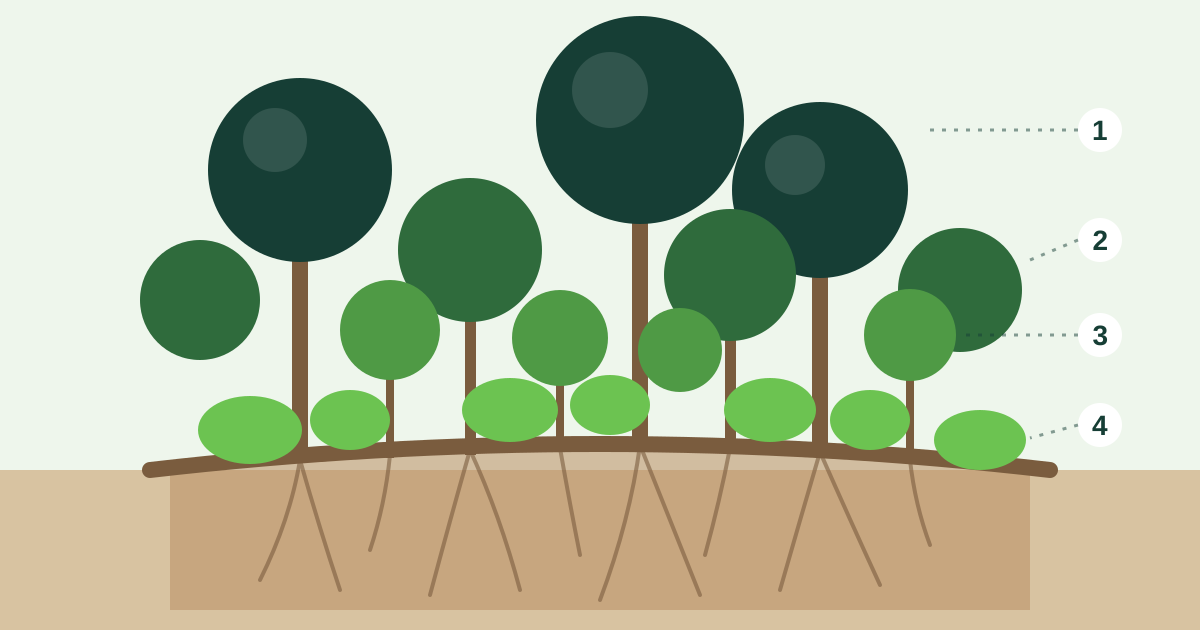
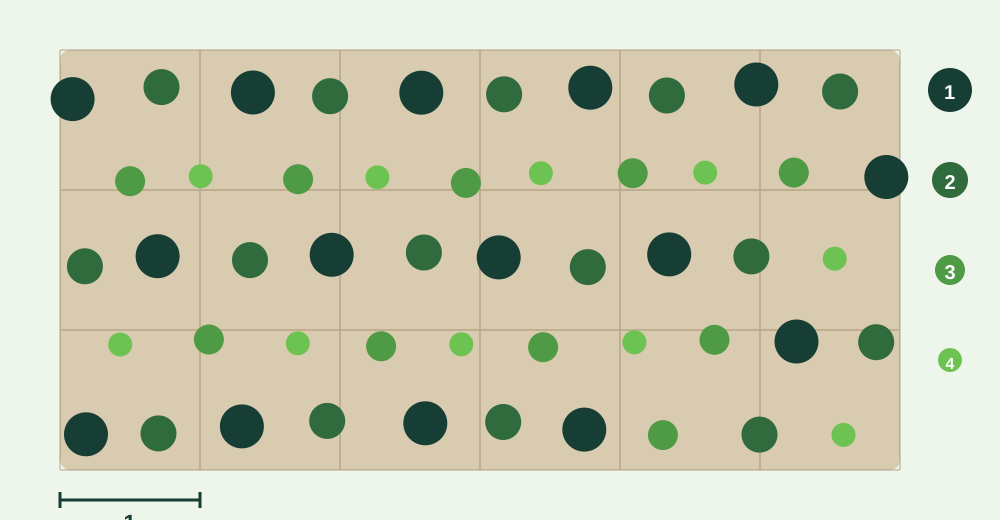
A Miyawaki forest is a small, very dense planting of native trees and shrubs: about three plants per square metre, from all the layers of a natural forest, on soil that has been deeply loosened and enriched, then thickly mulched. The plants compete for light and grow quickly upwards, and after two or three years of watering and weeding the forest is meant to look after itself. It can fit in a space as small as a few square metres, which is why "tiny forests" and "pocket forests" are now planted in schoolyards, city parks and back gardens around the world.
Where the Miyawaki method comes from
The method is named after Akira Miyawaki (1928–2021), a Japanese plant ecologist and professor at Yokohama National University. In the 1950s he studied in Germany with Reinhold Tüxen, who developed the idea of potential natural vegetation: the plant community that would grow on a site by itself if people stopped interfering. Back in Japan, Miyawaki's team mapped the vegetation of thousands of sites and found that the original native forests survived mostly in small patches, such as the groves around temples and shrines.
From the 1970s he used that knowledge to plant new native forests, first around factories and along roads, later in many countries. He received the Blue Planet Prize in 2006 for this work.
How a Miyawaki forest works
Four ideas make it different from ordinary tree planting:
- Native species only, chosen for the site. You plant the species of the local potential natural vegetation, not a general list of "useful" trees.
- All the layers at once. Canopy trees, smaller trees, shrubs and lower plants are planted together and mixed randomly, as in a natural forest, instead of waiting for one stage to follow another.
- Very close spacing. Usually 3–5 plants per square metre, about 60 cm apart. The plants shade the ground quickly, keep each other's roots cool and moist, and race upwards for light.
- A lot of work on the soil first. The ground is loosened to the depth of any compaction (sources give 30 cm to 1 m), mixed with compost and other organic matter, and covered with a thick layer of mulch after planting.
The goal is a closed canopy within a few years, so the forest makes its own shade and leaf litter and weeds can no longer compete.
What the evidence says
The method has many enthusiastic supporters and big claims attached to it, so it is worth knowing what has actually been measured.
- Growth and survival are often good. In the UK, Earthwatch reports higher survival in its Tiny Forests than in conventional plantings nearby, and fast early growth in some trees.
- Many claims are untested. A review published in the Journal of Applied Ecology (Morales and colleagues, 2026) looked at 51 publications. Only 41% measured anything, and few had a comparison or repeats. The claim of faster growth was partly supported. The often-repeated claim that a Miyawaki forest reaches maturity in 20–30 years had no evidence behind it at all, and the two studies that estimated carbon found no clear advantage over other methods in the long run.
- Dry climates are harder. A trial in Sardinia, in a dry Mediterranean climate, found that the early-succession trees grew faster on Miyawaki plots, but many plants died over the first decade, and the authors wrote that the best density for the Mediterranean still needs testing.
- In Israel, the group Miyawaki IL planted a forest at Shdemama, near Gedera, in 2022. Tamarisk and jujube saplings passed 2 m in less than a year. Yuval Sapir, director of the Tel Aviv University Botanical Garden, commented that this growth was similar to what young trees do in good conditions without the method.
None of this means the method doesn't work. It means a Miyawaki forest is a good way to grow a dense native thicket on a small plot, and not a magic shortcut to an old forest.
How to plant a Miyawaki forest, step by step
- Choose the spot. Full sun or nearly so, away from the house (see the fire note below), with room to walk around it. A compact block holds moisture much better than a line one plant wide. Pocket forests in Ireland range from about 6 to 50 m²; Earthwatch's Tiny Forests are about 200 m², the size of a tennis court.
- Find out what grows there naturally. Look at the nearest patch of natural woodland on similar soil, ask a local nursery for native plants, or look up the vegetation type of your region. In Israel, the Nature and Parks Authority and KKL-JNF publish lists of local trees and shrubs.
- Make the species list. The more species, the more like a forest it becomes: the forest in Brussels used 20 species and the Yakama Nation's pocket forests used 47. A home garden can start with 10–15. Western Washington University's guide suggests that about 70–80% of the plants be canopy and sub-canopy trees, about 10% shrubs, and the rest smaller plants.
- Prepare the soil. Remove weeds, loosen the soil as deep as it is compacted, and mix in plenty of compost or well-rotted manure, and, if you have them, wood chips or straw. On heavy clay, don't dig so deep that you create a pit that fills with water.
- Lay out the planting. Mark the area and place the pots before you plant: about 3 per square metre, mixed so that two plants of the same layer, and ideally of the same species, don't stand side by side.
- Plant young. Small saplings, typically 60–80 cm tall or smaller, settle in better than big trees. Plant at the start of the rainy season, firm the soil gently and water well.
- Mulch thickly. Cover the whole area with 10–15 cm of straw, leaves or wood chips. The mulch plays the part of forest leaf litter.
- Water and weed for 2–3 years. Water regularly, weed by hand until the plants close over, and replace any that die. After that, the plan is to step back and let it grow.
A Miyawaki forest in a Mediterranean garden
Most Miyawaki forests have been planted in wet climates: Japan, northern Europe, India's monsoon regions. In a Mediterranean climate like Israel's, with no rain for six months, a few changes matter:
- Plan the water. Run a drip line through the planting for the first one or two summers, then reduce it gradually. Put the forest where rain naturally collects, or feed it from a swale's overflow (see water harvesting in the garden).
- Use the local woodland as the model. The natural woodland of Israel's hills and coastal plain is the Mediterranean maquis (choresh). Good candidates include Palestine oak (Quercus calliprinos), carob (Ceratonia siliqua), Palestine terebinth (Pistacia palaestina) and, in the lowlands, Tabor oak (Quercus ithaburensis) as canopy trees; strawberry tree (Arbutus andrachne), bay laurel (Laurus nobilis), Judas tree (Cercis siliquastrum), hawthorn (Crataegus aronia), storax (Styrax officinalis) and Phillyrea latifolia as smaller trees; and mastic (Pistacia lentiscus), Italian buckthorn (Rhamnus alaternus) and Greek sage (Salvia fruticosa) as shrubs. On wet ground, Syrian ash (Fraxinus syriaca) and tamarisk (Tamarix) fit; in hot lowlands, Christ's thorn jujube (Ziziphus spina-christi).
- Avoid invasive species. Don't use coojong (Acacia saligna), tree of heaven (Ailanthus altissima) or castor bean (Ricinus communis), all invasive in Israel, even though they grow fast.
- Don't force a forest where there wasn't one. In the Negev and the Arava, the natural vegetation is not forest, and a dense planting would depend on irrigation forever.
Miyawaki forest or food forest?
Both are layered and both aim to work with nature, but they have different goals:
| Miyawaki forest | Food forest | |
|---|---|---|
| Goal | A native ecosystem | Food and other yields |
| Plants | Local native species only | Fruit, nut and support plants, native or not |
| Spacing | 3–5 plants per m² | Spaced so fruiting trees get enough light |
| After 3 years | Left mostly alone | Pruned, mulched and harvested every year |
You don't have to choose. In a permaculture design, a Miyawaki-style planting fits the outer, wilder zones of the garden: as a windbreak, a habitat corner for birds and insects, or a privacy screen. Many native species also give something to eat, such as carob pods, strawberry-tree fruit, bay leaves and hawthorn berries, so a native thicket can still feed you a little.
Planning a mini forest in Megumi Planner
In Megumi Planner you can draw the forest patch on your site plan, see how its shade will fall on the rest of the garden over the year, and place it in the right zone, away from the house. The plant library shows each tree's mature size and layer, so you can check the mix of canopy, sub-canopy and shrubs before you buy plants, and add swales or a drip line to get water to it.
All the tools for designing in layers are on one page: the food forest planner.
Frequently asked questions
How small can a Miyawaki forest be?
Pocket forests of 6 m² and even less have been planted. Very small plantings dry out and get weedy at the edges more easily, so a block of at least a few metres on each side works better than a narrow strip.
Can I plant fruit trees in a Miyawaki forest?
Not in the strict method, which uses only the local native vegetation. You can include native species with edible fruit, or plant a separate food forest next to it.
How long until it looks like a forest?
Young trees close the canopy within a few years in good conditions. A mature, old forest still takes many decades: the review in the Journal of Applied Ecology found no evidence for the popular claim of 20–30 years.
Does it need water after the first years?
In wet climates, usually not. In a Mediterranean climate, expect to water for the first one or two summers and in dry years, and choose drought-adapted local species so you can stop after that.
Sources
- Popular Miyawaki reforestation method lacks evidence, study finds – Mongabay, on Morales et al., Journal of Applied Ecology
- Effectiveness of the Miyawaki method in Mediterranean forest restoration programs – Schirone, Salis and Vessella (2011), via Biodiversity for a Livable Climate
- What is a Miyawaki forest? The science behind Tiny Forests – Earthwatch Europe
- What is the Miyawaki Method? – Western Washington University
- In crowded Japanese-style forest, Israeli trees find space to grow – The Times of Israel
- Pocket forest and Akira Miyawaki – Wikipedia
- Blue Planet Prize 2006: Akira Miyawaki – Asahi Glass Foundation
Keep reading
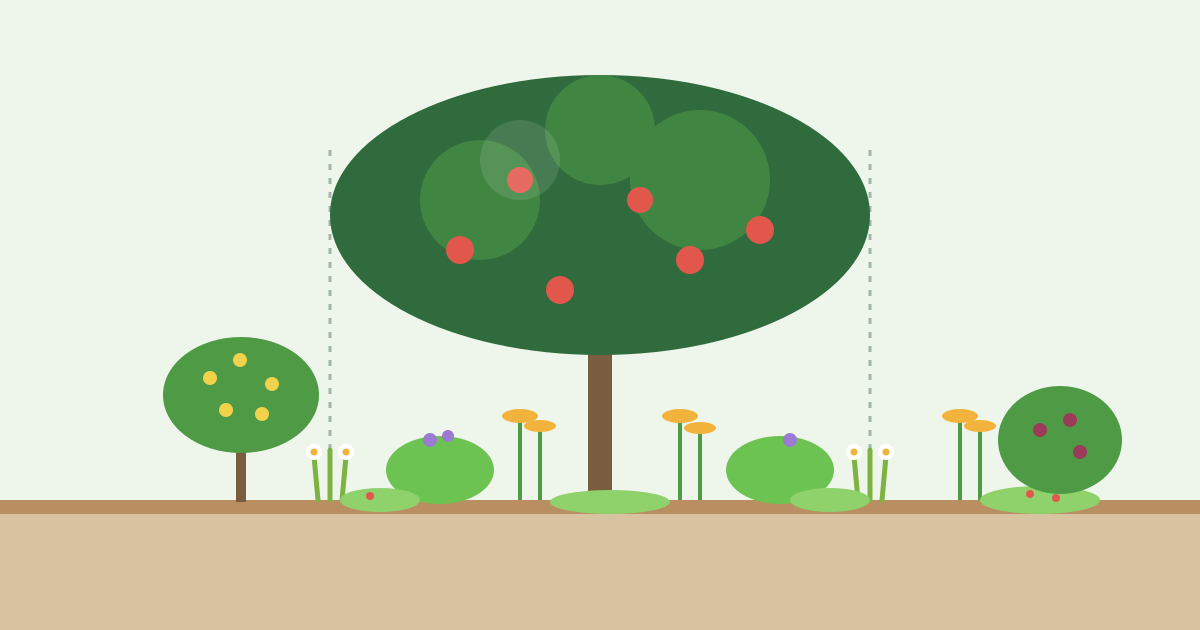
Fruit Tree Guilds: How to Plant a Permaculture Guild
What a permaculture guild is, the jobs each plant does around a fruit tree, example guilds for a dry Mediterranean garden, and how to plant one step by step.
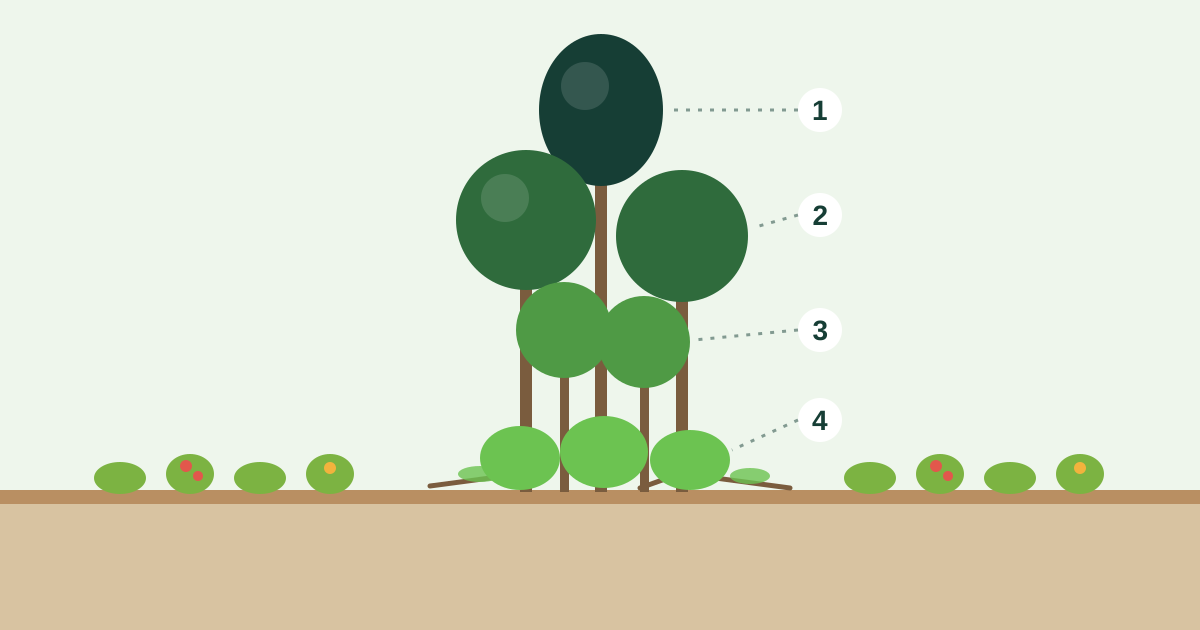
Syntropic Agroforestry: A Beginner's Guide for Gardens
What syntropic agroforestry is, how its strata, succession and pruning work, how to start a syntropic row at home, and how to adapt it to a hot, dry summer.
What Is Permaculture? Ethics, Principles and Pioneers
What permaculture is, where it came from, how Bill Mollison and David Holmgren started it, its three ethics and 12 principles, and how to use it in your garden.