
What Is Permaculture? Ethics, Principles and Pioneers
What permaculture is, where it came from, how Bill Mollison and David Holmgren started it, its three ethics and 12 principles, and how to use it in your garden.
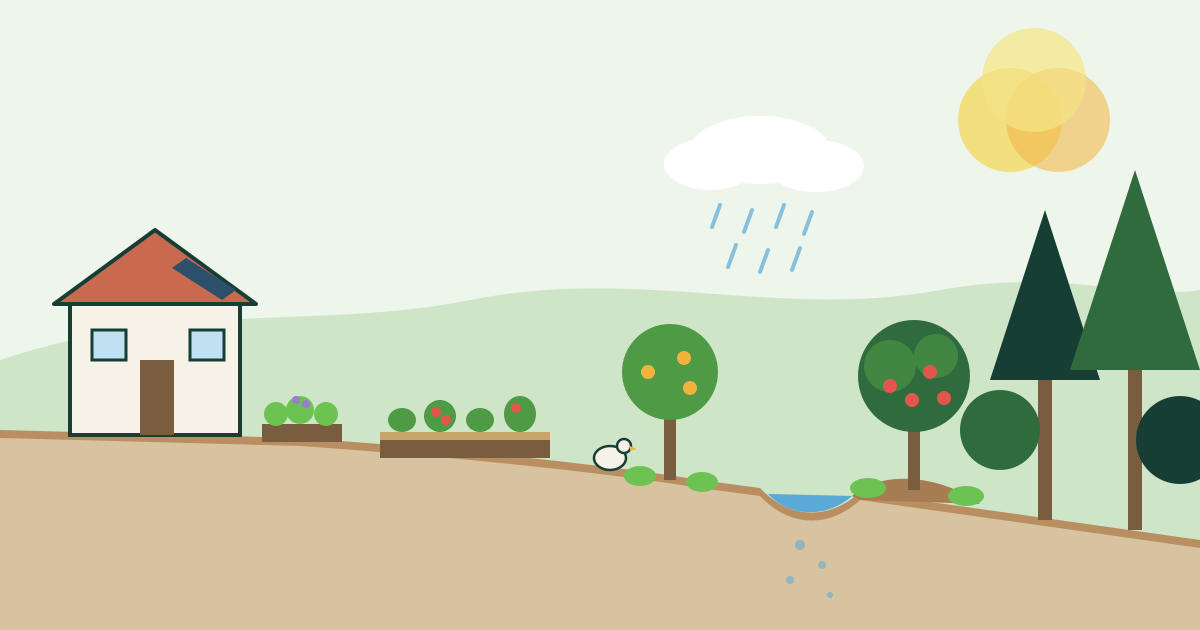
Permaculture is a way of designing gardens, farms and homes so that they work like natural ecosystems: they catch their own water, build their own soil, feed the people who live there and need less outside input every year. The word joins "permanent" and "agriculture", and later "permanent culture". It was worked out in Tasmania in the 1970s by Bill Mollison and David Holmgren, and it rests on three ethics – earth care, people care and fair share – and a set of design principles. It is not a list of planting tricks. It's a way of thinking about where everything goes and why.
Where the word comes from
In the early 1970s, oil crises and books like The Limits to Growth made many people ask how farming could carry on without cheap fuel and fertiliser. Mollison and Holmgren's answer was an agriculture built mostly from perennials – trees, shrubs and plants that live for years – arranged so that they support each other, as in a forest, instead of being ploughed and resown each season.
They called it permaculture, from "permanent agriculture". As the idea grew to include houses, water, energy, money and community, they began to explain it as "permanent culture" too: a culture can't last long without an agriculture that lasts. Holmgren today describes permaculture as "a design system for both sustainable land use and sustainable living".
The two pioneers: Bill Mollison and David Holmgren
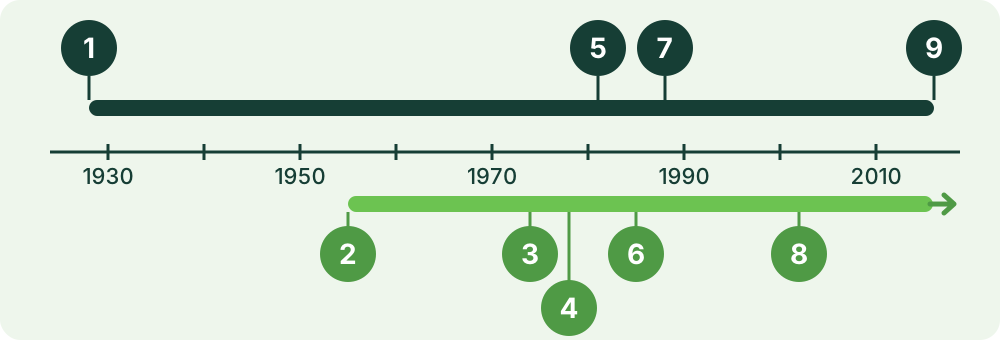
Bill Mollison (1928–2016)
Bill Mollison was born on 4 May 1928 and grew up in Stanley, a small fishing town on the north coast of Tasmania. He left school at 15 and worked in many jobs before joining the CSIRO's Wildlife Survey Section in 1954, where years of field work in Tasmania's forests showed him how much a natural system does without anyone tending it. He later taught at the University of Tasmania.
In 1974 he met David Holmgren, then a young environmental design student in Hobart, and the two developed the idea together. Holmgren's student thesis became the core of their joint book, Permaculture One, published in 1978.
After that, Mollison became the movement's great teacher and travelling spokesperson. He founded the Permaculture Institute in Tasmania at the end of the 1970s, and he developed the Permaculture Design Course (PDC): a course, usually 72 hours long, after which graduates could teach it themselves. That "teach the teachers" model spread permaculture across the world without any central organisation. In 1981 he received the Right Livelihood Award, often called the alternative Nobel Prize, "for developing and promoting the theory and practice of permaculture". His thick Permaculture: A Designers' Manual (1988) is still the PDC's main textbook. By the time of his death in Tasmania on 24 September 2016, the Right Livelihood Foundation counted more than 40,000 people who had taken certificated courses.
David Holmgren (born 1955)
Holmgren took a quieter road. Rather than travel and teach, he set out to live the ideas and test them on the ground. In 1985 he and his partner Su Dennett bought a small block of land at Hepburn in central Victoria and turned it, over decades, into Melliodora: about a hectare of food garden, orchard, animals and a solar house. It is one of the best-documented permaculture sites anywhere.
His great contribution to the theory is the book Permaculture: Principles and Pathways Beyond Sustainability (2002), which set out the three ethics and 12 design principles in the form most courses use today. Later books, such as RetroSuburbia (2018), apply them to ordinary suburban houses and gardens.
The three ethics
Everything in permaculture starts from three ethics:
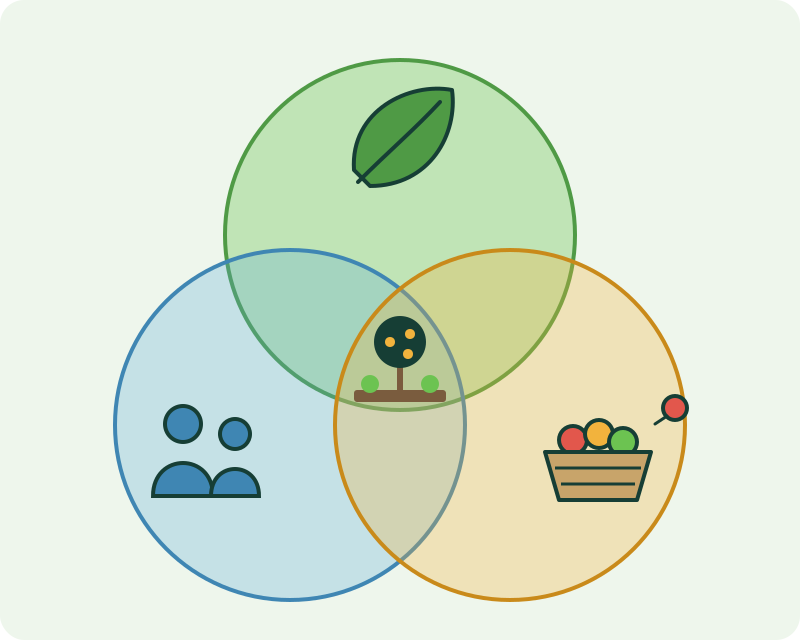
- Earth care – look after the soil, water, forests and every living thing, because all else depends on them.
- People care – meet people's needs for food, shelter, health and community, starting with yourself and your neighbours.
- Fair share – set limits to how much you take, and give the surplus back: to other people, or to the soil as compost and mulch.
In practice the ethics act as a test. A design that grows plenty of food but drains the neighbour's well fails earth care. A beautiful garden no one can afford to look after fails people care.
Holmgren's 12 design principles
Holmgren's principles are tools for thinking, not rules. Each one has a short garden example here:
| # | Principle | In the garden |
|---|---|---|
| 1 | Observe and interact | Watch the site through a whole year before you dig |
| 2 | Catch and store energy | Swales, tanks and mulch store winter rain; trees store sunlight as wood and fruit |
| 3 | Obtain a yield | Plant things you'll actually eat or use, early on |
| 4 | Apply self-regulation and accept feedback | Yellow leaves, pests and dry patches are information |
| 5 | Use and value renewable resources and services | Chickens to scratch, legumes to fix nitrogen, sun to dry fruit |
| 6 | Produce no waste | Kitchen scraps become compost; prunings become mulch |
| 7 | Design from patterns to details | Lay out zones, water and sun first, choose varieties last |
| 8 | Integrate rather than segregate | Put things where they help each other, as in a plant guild |
| 9 | Use small and slow solutions | One bed done well before ten done badly |
| 10 | Use and value diversity | Many species and varieties spread the risk |
| 11 | Use edges and value the marginal | The edge between bed and path, or forest and field, is the richest place |
| 12 | Creatively use and respond to change | Plants grow, shade spreads, climates shift – plan for it |
Mollison wrote his own list of principles in the Designers' Manual, such as relative location, each element performing many functions, and each important function supported by many elements. The two lists overlap. Holmgren's is the one most often taught today.
The core design tools
Ethics and principles become a garden through a handful of tools that most permaculture designs use:
- Observation. Before anything else: where the sun falls in winter and in summer, where rain runs, where frost settles, where you already walk.
- Zones. Place each element by how often you visit it, from zone 0 (the house) to zone 5 (wild land). Herbs by the kitchen door, nut trees far away. Our guide to permaculture zones goes zone by zone.
- Sectors. Map the energies that come from outside the site: sun angles, prevailing and hot winds, a fire risk, a view, noise, cold air flowing downhill. Then place windbreaks, shade and firebreaks to meet them.
- Stacking functions. Each element does several jobs. A carob tree gives pods, shade, fodder and wood; a pond gives water, habitat and reflected light.
- Guilds. Groups of plants that support a central tree: nitrogen fixers, mulch plants, flowers for pollinators and ground cover.
- Water harvesting. Slow, spread and sink rain into the soil before you pipe water in, with swales, basins and mulch.
What it looks like on the ground
- Food forests. A garden built in layers like a young forest: tall trees, smaller fruit trees, shrubs, herbs, ground cover, roots and climbers. Once established, it needs far less work than a vegetable plot. Related approaches are syntropic agroforestry and the dense Miyawaki forest.
- Swales. Level ditches dug along the contour, with a planted mound on their downhill side, so rain soaks in instead of running off. See how to build a swale.
- Deep mulch. Covering the soil all year with wood chips, straw or leaves feeds the soil food web, holds moisture and smothers weeds. The film Back to Eden (2011) made wood-chip mulching famous. Paul Gautschi's method isn't permaculture by name, but it applies the same idea of keeping the soil covered as a forest floor does. Our article on mulch has the details.
- Closed loops. Compost, worm bins, chickens, greywater for trees, and on-farm inputs such as Korean Natural Farming.
- Small spaces. A balcony, a courtyard or a small garden can follow the same ethics and principles; so can a community garden, where people care and fair share come first.
Permaculture in Israel's climate
Permaculture was born in a cool, wet place, so a design for Israel's Mediterranean and semi-arid climate has to adapt it. Almost all the rain falls in winter, and summers are long, hot and dry. That shifts the priorities:
- Catch winter rain in the soil. Swales, basins and mulch matter even more here, because every litre that soaks in during winter is a litre the trees can use in June. On heavy clay, keep swales away from foundations, and on steep slopes ask a professional.
- Plan drip irrigation from the start. A young food forest in Israel won't survive its first summers without water. Permaculture doesn't reject irrigation; it uses it carefully and to a plan.
- Use shade as a resource. Tall trees and pergolas protect smaller plants from the summer sun, and deciduous trees let the winter sun through.
- Choose plants that suit the land. Olive, carob, fig, pomegranate, almond, grape and date have fed people in this land for thousands of years, and most need little water once established.
- Map the hot and fire sectors. The dry, hot easterly hamsin and summer fires are the sectors that matter most here. A windbreak on the east side, and green, irrigated plants near the house rather than dry grass, help with both.
In Israel, Kibbutz Lotan in the Arava runs internationally recognised Permaculture Design Courses through its Center for Creative Ecology, and several private teachers and eco-farms around the country teach PDCs and shorter courses.
Common misconceptions
- "It's just organic gardening." Organic is about what you put on the soil. Permaculture is about where everything goes and how it connects, which is why it applies to houses, water and communities too.
- "It means no work." A mature food forest needs less work than a vegetable plot, but the first years take real effort: earthworks, planting, watering, mulching.
- "It's only for big farms." Most permaculture designs are home gardens. The principles scale down to a balcony.
- "It means no irrigation." Especially in a dry climate, careful drip irrigation is part of good design while plants get established.
- "Swales belong in every garden." On a flat plot, a rain garden or basin is often better; near a house, on clay or on unstable slopes, a swale can do harm.
- "It's one fixed method." It's a design approach. Two good permaculture gardens in different climates can look completely different.
Planning a permaculture garden in Megumi Planner
Permaculture design starts on paper, and Megumi Planner covers the main steps of it. The editor's tools as they are today (see the 12 steps on the Features page):
- The site at its true size. Import a site plan, an aerial photo, a CAD drawing (DXF) or a plot drawn in Google Earth, and set the scale. Choose the Permaculture design garden type, which offers every tool.
- Zones. Draw zones 0 to 5 on the plan from the Zones layer. Each one is listed with its area, and the "i" next to it explains what usually goes there.
- Sun and shade – the sun sector. Set the date and move the sun across the day, or turn on the shade map to colour the ground by hours of direct sun. Check December, when shadows are longest. Sectors such as wind and fire have no tool of their own; draw and label them as notes on the plan.
- Water. In the Swales tab, set the slope, show contour lines and water flow, draw swales on contour (each shows whether it's level and how many litres it holds), basins, spillways and roof downspouts, then press Start rain to watch the storm fill them.
- Plants and guilds. Give the garden its location and the plant list keeps to plants that suit its climate. Guild roles (nitrogen fixer, pollinators, pest control, mulch plant) show as icons, and selecting a tree shows which roles are missing around it. Auto-plant with the Forest garden style fills a mulch bed with trees, shrubs, guild herbs and ground cover in one click, as a starting point you can change.
- Irrigation and time. Draw drip lines and rings, and get a parts list. The Growth view slider shows the garden from year 1 to maturity, so you can see where the canopy will close.
- Share and present. Send a view-only link, or make the Garden plan document: for a permaculture project it includes a food forest explainer next to the planting plan, irrigation and plant schedule.
All the tools for a whole permaculture design – zones, swales, rain and guilds – are on one page: permaculture design software.
Frequently asked questions
Who invented permaculture?
Bill Mollison and David Holmgren developed it together in Tasmania, Australia, from 1974, and published Permaculture One in 1978. Mollison spread it through teaching, and Holmgren set out its 12 principles.
What are the three ethics of permaculture?
Earth care, people care and fair share: look after the land, look after people, and limit what you take while sharing the surplus.
What is a PDC?
The Permaculture Design Course, usually 72 hours, based on Mollison's curriculum. It's taught by independent teachers and institutes around the world, including in Israel.
Can I practise permaculture in a small garden?
Yes. Zones, mulch, guilds and catching rain all work on a few square metres. Start with zone 1 by the door.
Sources
- What is permaculture? – Holmgren Design
- About David Holmgren and Melliodora: the property – Holmgren Design
- Permaculture ethics and the 12 principles – Permaculture Principles (David Holmgren)
- David Holmgren's principles – Permaculture Association (UK)
- Bill Mollison, 1981 Laureate – Right Livelihood Foundation
- A revolution disguised as organic gardening: in memory of Bill Mollison – The Conversation
- Bill Mollison 1928–2016 – Resilience
- The history of permaculture – Kibbutz Lotan Center for Creative Ecology
- Permaculture One, Bill Mollison and David Holmgren (1978); Permaculture: A Designers' Manual, Bill Mollison (1988); Permaculture: Principles and Pathways Beyond Sustainability, David Holmgren (2002)
Keep reading
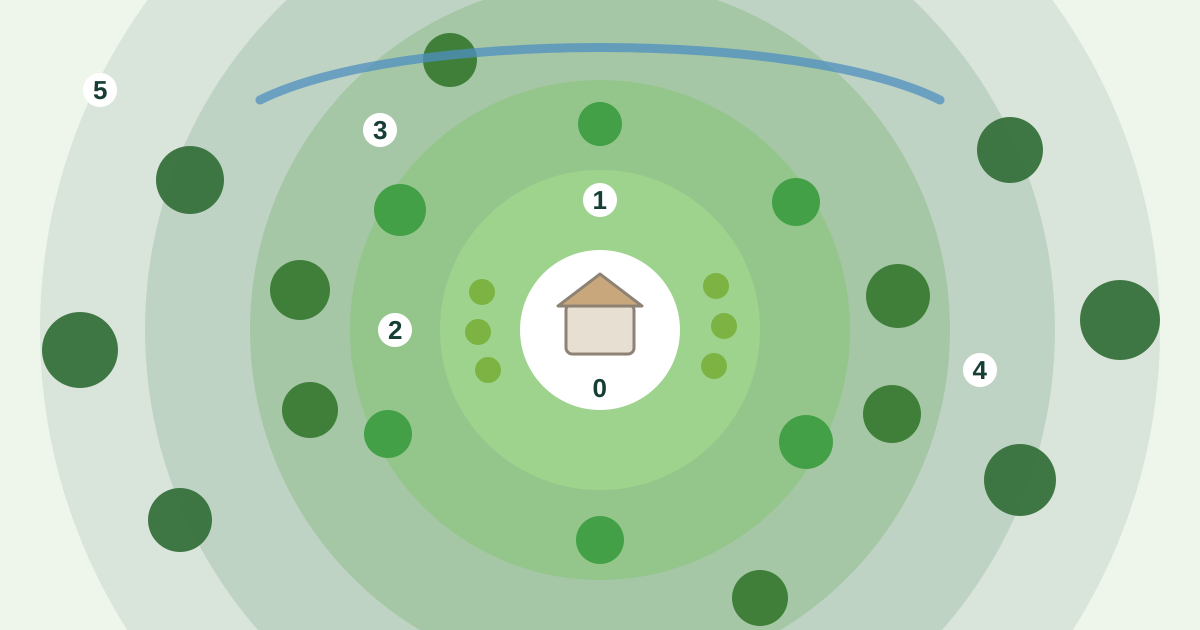
Permaculture Zones: How to Plan a Garden From 0 to 5
Permaculture zones place each part of a garden by how often you visit it. Learn what goes in zones 0 to 5 and how to map them on a small or large plot.
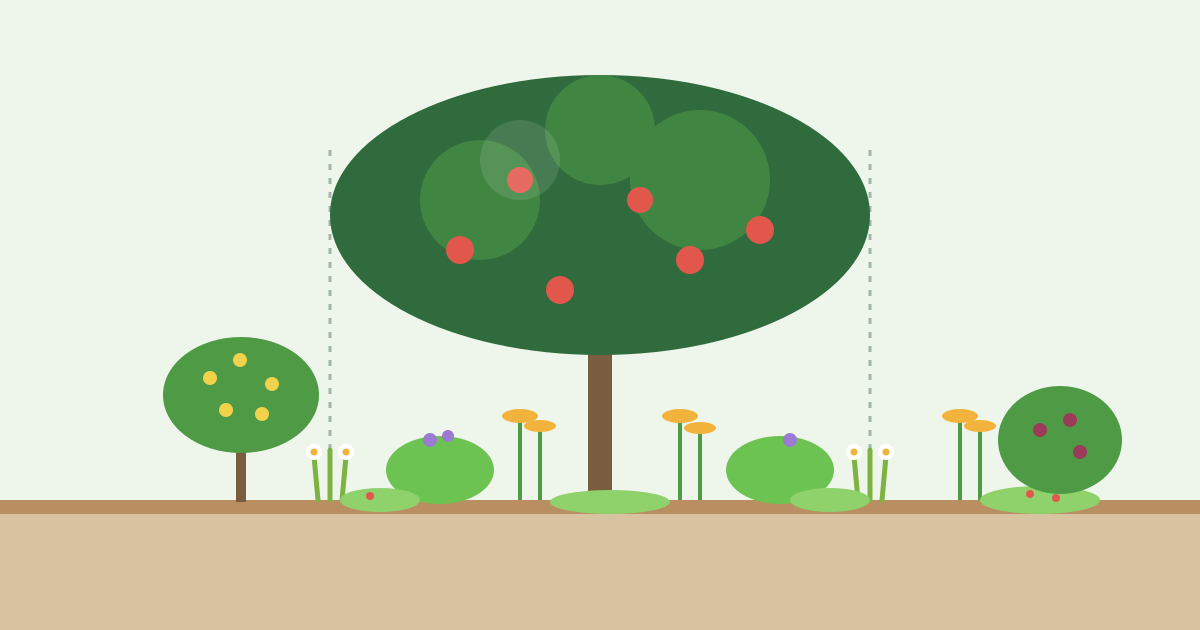
Fruit Tree Guilds: How to Plant a Permaculture Guild
What a permaculture guild is, the jobs each plant does around a fruit tree, example guilds for a dry Mediterranean garden, and how to plant one step by step.
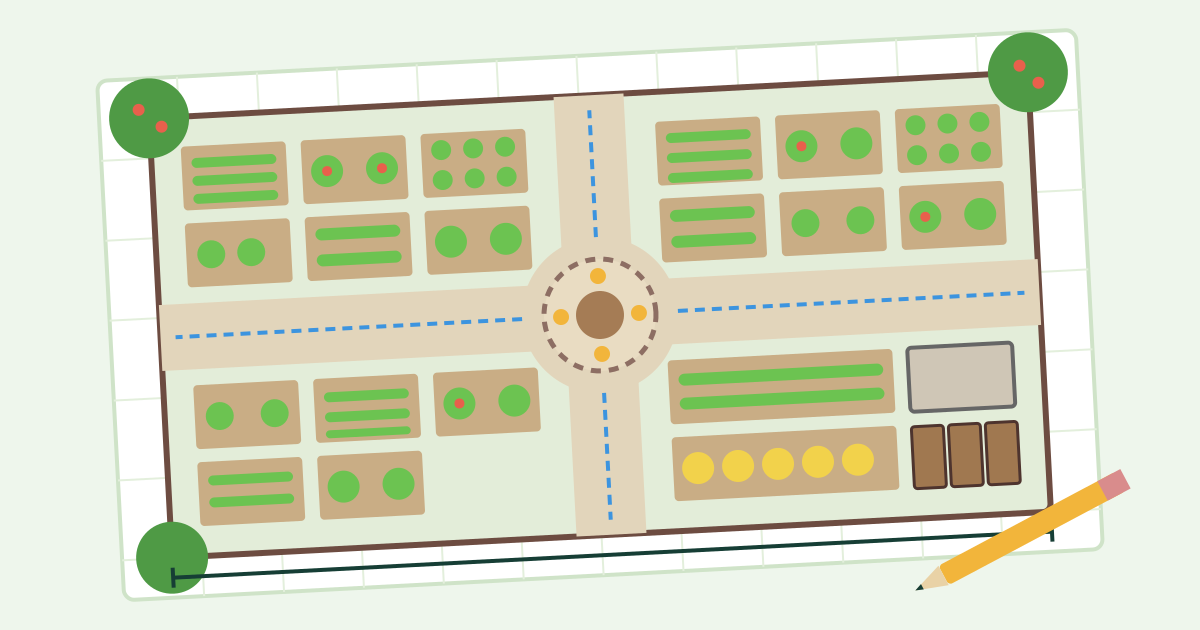
How to Plan a Community Garden, Step by Step
How to plan a community garden: the group, the land and permits, the site survey, plots and shared areas, water, budget and rules – and one shared plan for all.