
Korean Natural Farming (KNF): DIY Natural Fertilizers
What Korean Natural Farming is, how its homemade ferments are meant to support plant growth and health, what the research shows, and how to make them at home.
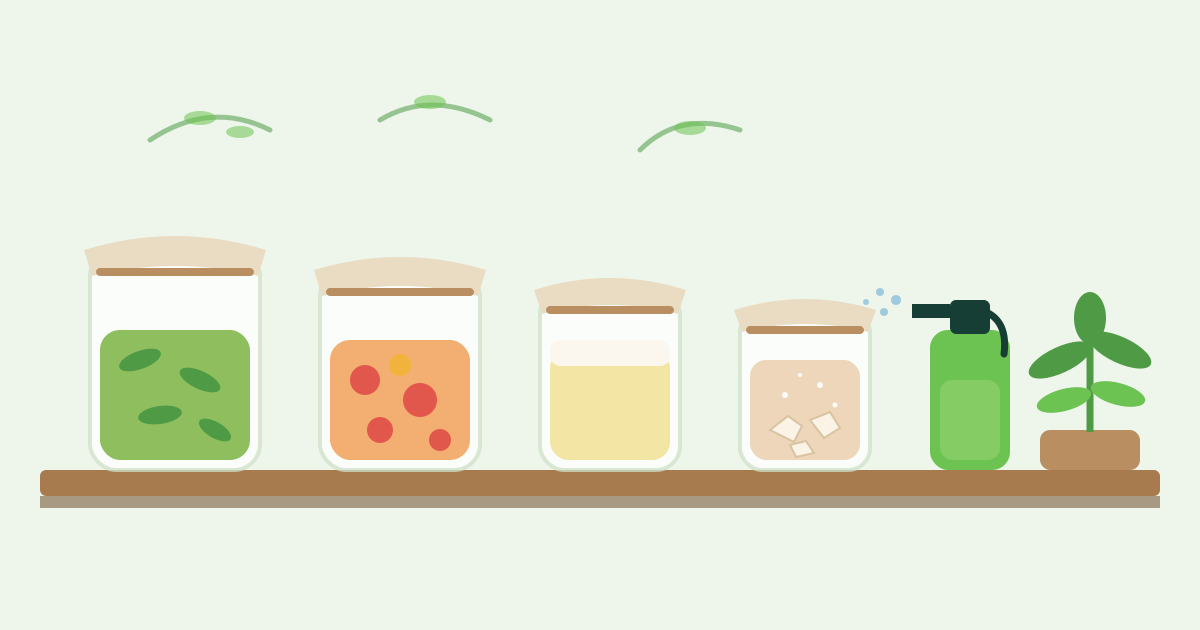
Korean Natural Farming (KNF) is a way of growing that replaces bought fertilisers with inputs you ferment yourself from local materials: young plant shoots, ripe fruit, rice, milk, eggshells and the microbes living in nearby woodland soil. The ferments are diluted heavily in water and given to the soil or sprayed on leaves. The aim is less to feed plants directly than to feed and multiply soil life, which in turn makes nutrients available and helps plants grow strong and resist disease.
Where KNF comes from
KNF was developed by Cho Han-kyu (1935–2025), a farmer from Korea who studied natural farming methods in Japan in the 1960s and combined them with traditional Korean fermentation, the same skills behind kimchi and soy sauce. He later founded the Janong Natural Farming Institute, taught in dozens of countries, and his methods spread widely, especially in Asia and Hawaii, where the University of Hawaii has studied and published them.
The core ideas are:
- Use indigenous microorganisms (IMO), the bacteria and fungi already adapted to your area, instead of bought cultures.
- Make inputs from what's around you, so the farm or garden supplies most of its own fertility.
- Use small amounts at the right time, matching the input to the plant's stage of growth.
- Avoid synthetic fertilisers and tilling, and keep the soil covered and alive.
How KNF is meant to help plants
KNF inputs are very diluted, often one part in 500 or 1,000 parts of water, so they add only tiny amounts of nutrients. Their supporters see them as boosters for soil life and plant growth rather than fertilisers in the usual sense:
- Microbes: IMO and lactic acid bacteria add living organisms that break down organic matter, make nutrients available to roots, and compete with disease-causing organisms.
- Sugars and plant compounds: Fermented juices carry sugars, amino acids and other compounds from fast-growing tissue, which feed soil microbes and are said to stimulate growth.
- Timing: Different inputs are matched to the stage of growth: plant juices and fish amino acids while plants are growing leaves, fruit juice and calcium when they flower and set fruit.
What the research says
Scientific evidence for KNF is still limited, and the results are mixed:
- At the University of Hawaii, researchers compared KNF with organic and conventional vegetable growing, and reported a richer, better-balanced soil food web under KNF. A master's thesis there found that a second application of IMO, two weeks after the first, increased yields.
- A farmer-led trial in New York, funded by the US SARE programme, found that homemade IMO was very rich in bacteria, but low in nitrogen, showed signs of having gone anaerobic, and contained potential plant pathogens, which the authors linked to the very wet recipe. Per area, it cost more than compost.
- Another SARE-funded trial found no significant effect of IMO on soil nutrients, leaf nutrients or the soil microbial community.
The honest summary: KNF is cheap, uses waste materials and is unlikely to harm plants when diluted properly, but don't expect it to replace compost, mulch and good soil care. It works best as an addition to them.
How to make your own KNF inputs
You need glass or ceramic jars, cloth or paper towels and string to cover them, a kitchen scale, and brown sugar, which feeds the fermentation and draws the juices out of plant material. Fill jars only two-thirds to three-quarters full, cover them with breathable cloth rather than a tight lid, and keep them in a cool, shaded place, ideally around 20–25 °C. Label every jar with what it is and the date.
Fermented plant juice (FPJ)
FPJ is the most common KNF input and the easiest to start with. It's made from the fast-growing tips of vigorous plants and is used while plants are growing leaves and stems.
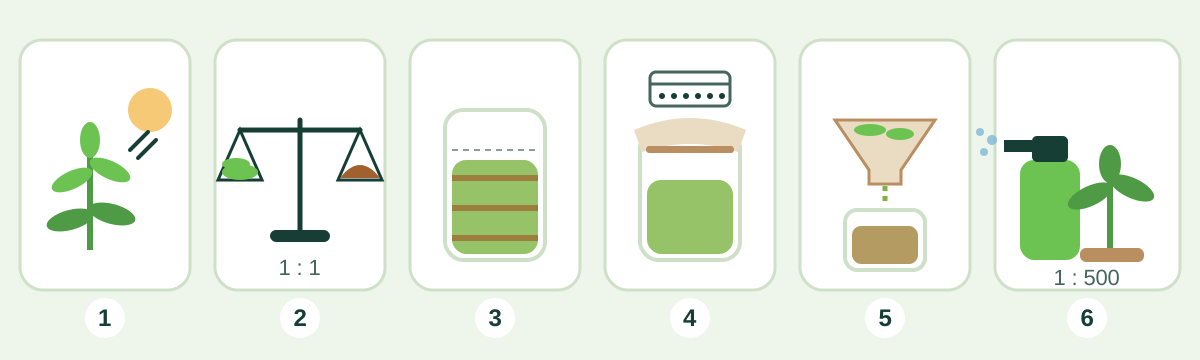
- Pick young growing tips, about 5–8 cm long, early in the morning, when plants are full of water. Don't pick after rain. Use vigorous local plants: in KNF, mugwort, comfrey and bamboo shoots are classic choices; in Israel, nettle, mallow, wild mustard or the tips of your own healthy crops work too.
- Weigh them and chop roughly. Mix with an equal weight of brown sugar. Very juicy material may need a little more sugar; dry material a little less.
- Pack into a jar, pressing down, until it's two-thirds full.
- Cover with cloth and leave for about 7 days in the shade. In a hot Israeli summer it may be ready sooner.
- Strain the liquid. It should smell sweet and fermented, like wine or vinegar, not rotten. Store it in a cool place, with a loose cap.
- Dilute 1:500 to 1:1000 in non-chlorinated water (leave tap water open for a day) and spray leaves or water the soil, early in the morning or in the evening, every week or two while plants are growing.
Fermented fruit juice (FFJ)
FFJ is made the same way as FPJ, from ripe, sweet fruit such as banana, papaya, mango or grapes, chopped and mixed with an equal weight of brown sugar. Ferment it for about a week, strain, and use it diluted 1:500–1:1000 when plants are flowering and setting fruit. It's a good use for overripe fruit from your own trees.
Lactic acid bacteria (LAB)
LAB is a culture of the same bacteria that sour yogurt and pickles. In KNF it's used to improve soil life, break down organic matter and reduce bad smells in compost and animal housing.
- Rinse rice in water and keep the cloudy rinsing water. Cover it with cloth and leave it for 3–7 days until it smells sour and separates into layers.
- Mix 1 part of that liquid with 10 parts milk and cover again.
- After about a week, the milk separates into curds on top and a yellowish liquid below. The liquid is the LAB serum. Strain it; the curds can go into the compost.
- Store it in the fridge, or mix it with an equal weight of brown sugar to keep it at room temperature.
- Dilute about 1:1000 in water for watering soil or spraying.
Water-soluble calcium (WCA)
Calcium helps plants build strong cell walls and fruit, and helps prevent problems such as blossom-end rot in tomatoes.
- Clean eggshells, remove the inner membrane and roast them lightly in a dry pan or oven until they are slightly browned.
- Add 1 part shells to 10 parts vinegar by weight, traditionally brown rice vinegar, though any natural vinegar works. It will bubble as the vinegar dissolves the shells.
- Wait until the bubbling stops, usually 7–10 days, then strain.
- Dilute about 1:1000 and spray when plants are flowering and setting fruit, often together with FFJ.
Indigenous microorganisms (IMO), in short
IMO is the heart of KNF, but also the most work. In short: cooked rice is placed in a wooden box under the leaf litter of a healthy nearby woodland for a few days, until it is covered in white mould (IMO1). The mould is mixed with an equal weight of brown sugar (IMO2), then with bran and water in a pile that is turned and kept moist (IMO3), and finally with soil (IMO4), before being spread on beds. If you want to try it, start with a small amount, keep the pile damp but not wet, and throw away rice covered in coloured or black mould. Never collect from protected nature reserves.
Fitting KNF into a permaculture garden
KNF and permaculture share the same idea: build fertility from local resources and look after soil life. KNF ferments fit alongside the basics, not instead of them:
- Keep the soil covered. Mulch feeds soil life far more than any spray; see mulch in the garden.
- Grow your raw materials. Comfrey, nettles and other vigorous plants in a guild supply tips for FPJ, and fruit trees supply windfalls for FFJ.
- Use them where you look every day. A weekly spray of FPJ suits the vegetable beds close to the house, such as a square foot garden.
Planning it in Megumi Planner
In Megumi Planner you can mark on your site plan where the vegetable beds, fruit trees and fast-growing support plants such as comfrey are, so the materials for your ferments grow close to where you'll use them. The plant library shows each plant's size and needs, which helps you leave room for a patch of plants grown just for cutting.
Frequently asked questions
Is KNF the same as organic farming?
No. Most KNF inputs are allowed in organic growing, but KNF is a specific method with its own recipes, focused on fermenting local materials and growing local microbes.
Can I use white sugar instead of brown sugar?
Most KNF guides use brown or unrefined sugar. White sugar will ferment too, but the method's teachers prefer less refined sugar.
How long do the ferments keep?
Stored cool and dark with a loose cap, FPJ and FFJ keep for many months. LAB keeps longest in the fridge.
Is KNF suitable for a small home garden?
Yes. FPJ, FFJ, LAB and WCA can all be made in a kitchen in small jars. IMO needs more space and work.
Sources
- Korean natural farming – Wikipedia
- Fermented plant juice (publication SA-7) – University of Hawaii, CTAHR
- Water-soluble calcium (publication SA-10) – University of Hawaii, CTAHR
- Korean Natural Farming (publication SA-19) – University of Hawaii, CTAHR
- Soil bacteria in Korean Natural Farming, organic and conventional systems (publication SA-21) – University of Hawaii, CTAHR, 2021
- Master's thesis on Korean Natural Farming – Keliikuli, University of Hawaii, 2018
- Comparison of Farm-produced and Commercial Microorganism Inoculants – SARE, 2022
- Effect of an Indigenous Soil Microbial Inoculant on Soil, Soil Microbial Community and Leaf Nutrient Density – SARE
- Fermented Plant Juice: A Drink Only a Garden Could Love – Chelsea Green
- Korean Natural Farming – What is it? Does it work? – Robert Pavlis, Garden Myths
Keep reading
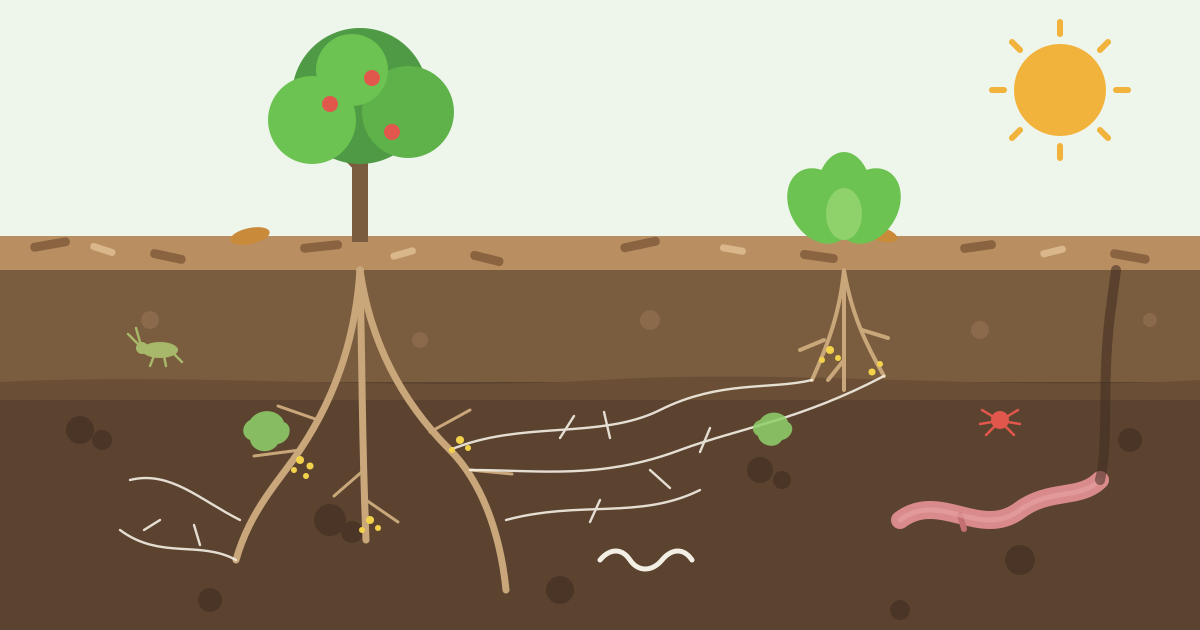
The Soil Food Web: How to Bring Your Garden Soil to Life
What the soil food web is, what Elaine Ingham taught about soil biology and where her ideas are debated, and ten things you can do to grow healthier soil life.
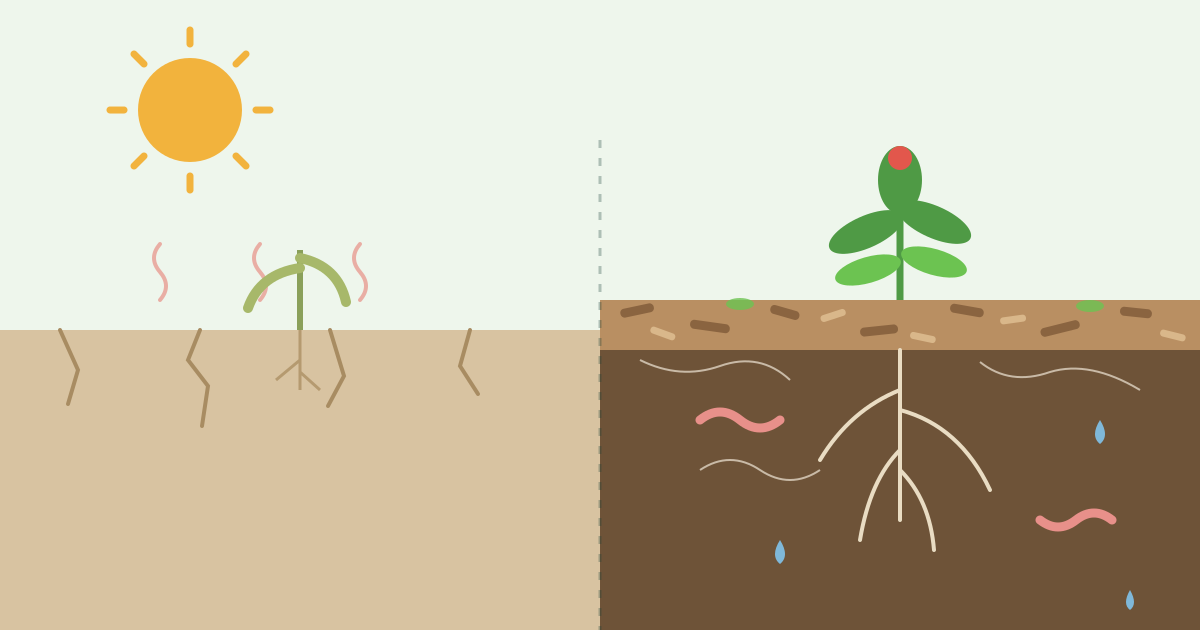
Mulch in the Garden: Why It Matters and How to Use It
Why mulch is the most useful thing you can do for garden soil, what the Back to Eden wood chip method teaches, which mulch to use where, and how deep to lay it.

What Is Permaculture? Ethics, Principles and Pioneers
What permaculture is, where it came from, how Bill Mollison and David Holmgren started it, its three ethics and 12 principles, and how to use it in your garden.