
Fruit Tree Guilds: How to Plant a Permaculture Guild
What a permaculture guild is, the jobs each plant does around a fruit tree, example guilds for a dry Mediterranean garden, and how to plant one step by step.
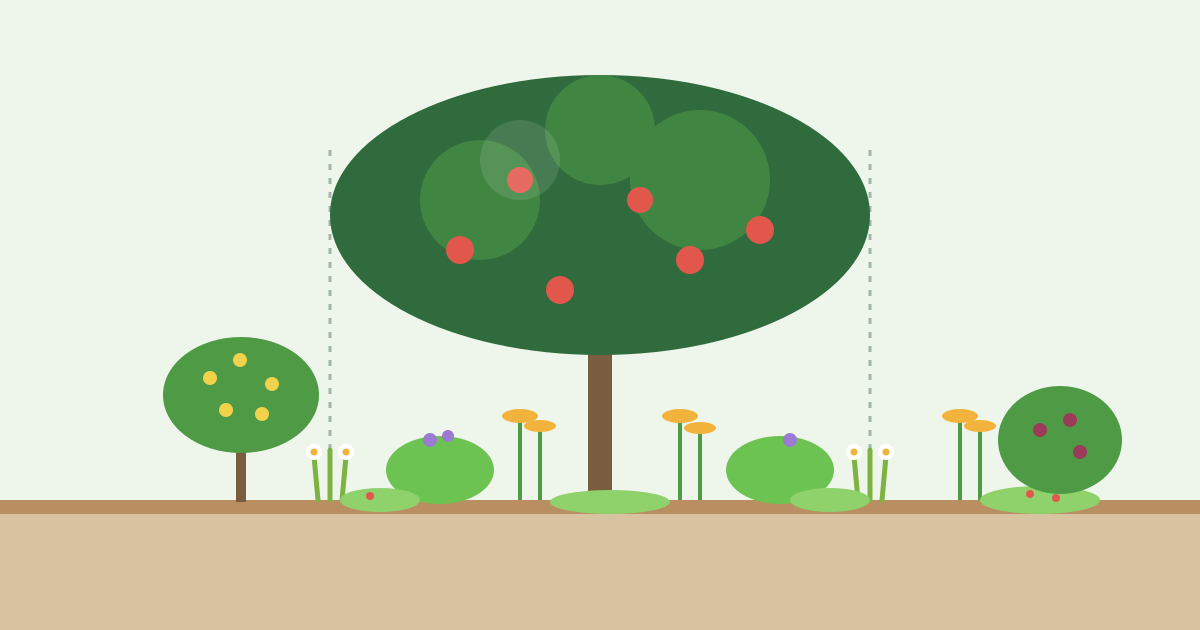
A permaculture guild is a group of plants grown together around a central plant, usually a fruit tree, where each plant does a job that helps the others: some feed the soil, some cover it, some attract pollinators and pest-eating insects, and some keep grass away from the tree's roots. A guild turns a lone tree in a lawn into a small, self-supporting patch of food forest, and it is one of the easiest ways to start one.
What a guild is, and how it differs from companion planting
Companion planting pairs two or three plants that do well together, such as basil next to tomatoes. A guild goes further: it is a whole planting designed around one tree, with plants at several heights and in several roles, chosen so the group needs less water, fertiliser and work than the tree would on its own. Bill Mollison, who co-founded permaculture, described guilds in the 1980s, and Toby Hemenway's book Gaia's Garden made the fruit tree guild one of the best-known permaculture designs.
The idea comes from nature. In a wild woodland, trees never grow alone: there are shrubs, herbs, climbers and ground cover around them, and dead leaves on the ground. A guild copies that structure on a small scale.
The jobs in a guild
Most guild guides sort plants by the job they do. One plant often does several jobs, and you don't need every role in every guild.
| Role | What it does | Examples for a Mediterranean garden |
|---|---|---|
| Central tree | The main crop that the guild supports | Fig, pomegranate, olive, citrus, apple, plum, mulberry |
| Nitrogen fixers | Legumes whose roots host bacteria that take nitrogen from the air | Broad beans, peas, lupins, clover and vetch in winter; pigeon pea in warm areas |
| Mulch plants | Plants with lots of leaves that you cut and drop around the tree | Comfrey, globe artichoke, cardoon |
| Insectary plants | Flowers that feed pollinators and the insects that eat pests | Dill, fennel, coriander, yarrow, Greek sage, thyme |
| Suppressors | Dense bulbs or low plants that keep grass from creeping in | Garlic, garlic chives, leeks, daffodils, irises |
| Ground cover | Low plants that shade the soil and keep it moist | Strawberries, creeping thyme, nasturtium, sweet potato in summer |
What we know, and what is still guesswork
Guilds are widely recommended, but not every claim about them is well tested:
- Nitrogen fixers do take nitrogen from the air, but most of it stays in the plant until its leaves and roots die and rot, or you cut it and drop it. To feed the tree, cut the legumes back regularly.
- "Dynamic accumulators" such as comfrey are said to bring up minerals from deep in the soil with long roots. The evidence for this is weak, and studies show that most of comfrey's roots stay in the top 30 cm or so. Comfrey is still a very good mulch plant, because it grows a huge amount of leaf that rots quickly.
- Pest-repelling plants like chives and marigolds have mixed evidence. Flowering plants that attract predatory insects, such as hoverflies, lacewings and parasitic wasps, have stronger support.
The practical lesson: choose plants that are useful to you, such as herbs you cook with, flowers you like and vegetables you eat, and that also cover, feed or protect the soil. A guild doesn't have to follow a fixed recipe to work.
How to plant a fruit tree guild, step by step
- Start with the tree. Choose a tree that suits your climate and space, and plant it in its permanent spot. In Israel, the best time to plant most fruit trees and their guild is late autumn to early spring, when the rain helps the roots settle.
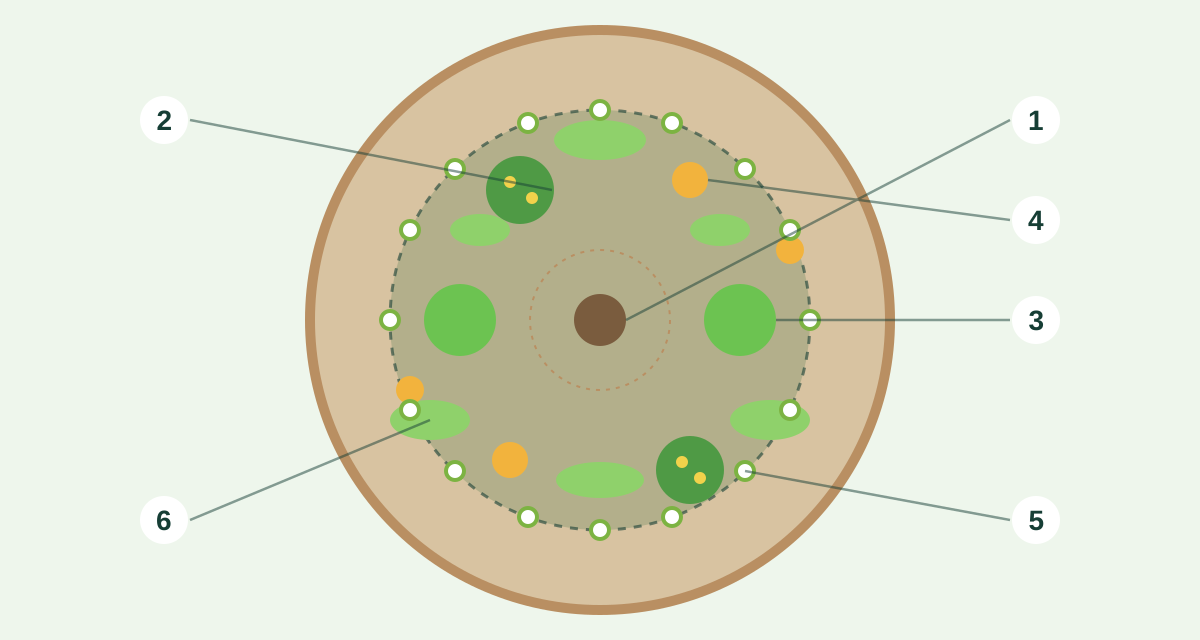
- Mark the drip line, the edge of the tree's canopy when it is mature. That's where most of its feeding roots will be, and it's the outer edge of the guild.
- Kill the grass. Lay cardboard over the whole circle, wet it, and cover it with 10–15 cm of mulch such as wood chips, straw or leaves. Keep the mulch a hand's width away from the trunk.
- Plant the bulb ring along the drip line to stop grass from coming back in.
- Add the support plants. Put nitrogen fixers and mulch plants between the trunk and the drip line, insectary herbs in sunny gaps, and ground cover everywhere else. Leave a clear circle of about 50 cm to 1 m around the trunk of a young tree, so it doesn't compete for water.
- Water them together. Run a drip ring that waters the whole guild, not just the trunk. Plants that share a guild should have similar water needs.
- Cut and drop. Cut the mulch plants and legumes a few times a year and lay the leaves around the tree. As the tree grows and its shade spreads, move sun-loving plants out to the edge and add shade-tolerant ones underneath.
Example guilds for a dry Mediterranean garden
These are starting points, not fixed recipes. Adjust them to your soil, water and taste.
A fig guild
Figs are among the most drought-tolerant fruit trees and grow large, so give them space. Around the fig: broad beans and lupins in winter as nitrogen fixers, a globe artichoke or two as mulch plants, Greek sage (Salvia fruticosa), thyme and wild fennel as insectary plants, and garlic along the drip line. Strawberries or nasturtium cover the soil in winter.
A pomegranate guild
Pomegranates are smaller and suit a small garden. Combine them with peas or clover in winter, thyme, savory (Satureja thymbra) and yarrow for flowers, a ring of garlic chives, and creeping thyme as ground cover.
A citrus guild
Citrus needs more water and dislikes competition near its shallow roots, so keep the inner circle clear and well mulched. Comfrey works better here than in a dry guild, because it gets regular water. Add coriander and dill in winter, nasturtium as ground cover, and pigeon pea at the edge in warmer areas.
The Three Sisters, a guild of annuals
Not every guild has a tree. Maize, climbing beans and squash, grown together by many Indigenous peoples of the Americas, are a classic example: the maize is a pole for the beans, and the squash's large leaves shade the soil. It is a good summer guild for a vegetable bed.
Guilds in a hot, dry summer
Most guild guides are written for climates with summer rain. In Israel, the six dry months change the design:
- Water is the limit. Every plant in the guild shares the tree's water. Choose drought-tolerant support plants, and group thirsty plants such as citrus and comfrey in guilds of their own.
- Use the winter. Many of the best nitrogen fixers and ground covers, such as broad beans, peas, lupins, clover and nasturtium, grow in the rainy season and die back in summer, leaving mulch. That timing suits a Mediterranean guild well.
- Local plants are tough. Mediterranean herbs like sage, savory, thyme and wild fennel cope with the summer and feed insects in spring.
- Mulch thickly to protect the soil and roots from the sun, and top it up every autumn.
A guild is the building block of a food forest: several guilds side by side become one. Guilds around fruit trees usually sit in zones 2 and 3, a little further from the house than the vegetable beds. To catch more winter rain for them, read about water harvesting in the garden. For a different way of packing many plants into one row, see syntropic agroforestry.
Planning guilds in Megumi Planner
In Megumi Planner you can place a fruit tree on your site plan and see the size of its canopy when it is mature, which shows you where the drip line and the bulb ring will be. You can then add the support plants around it, see which layer each one belongs to, and plan a drip ring that waters the whole guild.
All the tools for designing in layers are on one page: the food forest planner.
Frequently asked questions
How big is a guild?
As big as the mature tree's canopy. For a fig, that can be 4–6 m across; for a dwarf citrus or pomegranate, 2–3 m.
Can I add a guild around an existing tree?
Yes. Be careful not to damage the roots: don't dig deeply under the canopy, and plant small plants and seeds rather than large ones.
Do I need every role in every guild?
No. Choose the roles your tree needs most. A young tree on poor soil benefits most from nitrogen fixers and mulch; a tree in a lawn benefits most from a bulb ring and a thick mulch.
Is a guild the same as a food forest?
A guild is one unit, usually around a single tree. A food forest is many guilds and layers together over a larger area.
Sources
- Plant Guilds – Edible Forest Garden, James Madison University
- Plant Guilds eBooklet – Midwest Permaculture
- Planting a Fruit Tree Guild – Fine Gardening
- What Are Fruit Tree Guilds? – Gardener's Path
- Dynamic Accumulators – Do They Exist? – Robert Pavlis, Garden Myths
- Challenging Permaculture Dogma: Fruit Tree Guilds, Hype vs. Reality – The Poor Proles Almanac
- Comfrey – Mount Sinai Health Library
Keep reading
What Is Permaculture? Ethics, Principles and Pioneers
What permaculture is, where it came from, how Bill Mollison and David Holmgren started it, its three ethics and 12 principles, and how to use it in your garden.
Miyawaki Forest: How to Plant a Tiny Native Forest
What the Miyawaki method is, how to plant a dense mini forest of native trees step by step, what the evidence says, and how it fits a Mediterranean garden.
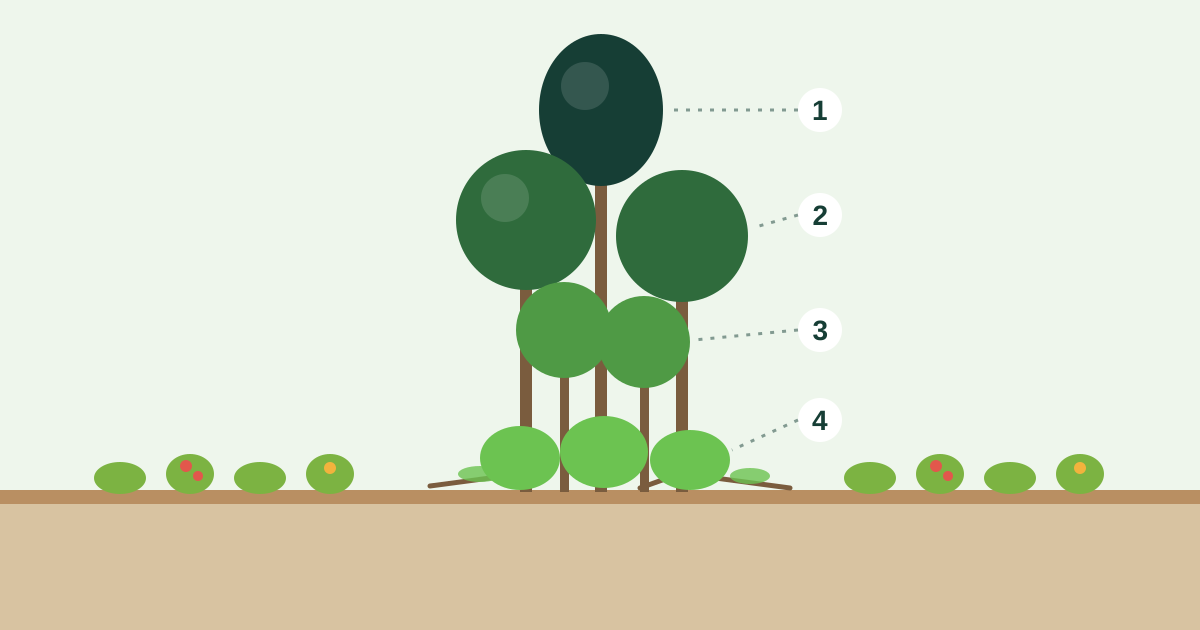
Syntropic Agroforestry: A Beginner's Guide for Gardens
What syntropic agroforestry is, how its strata, succession and pruning work, how to start a syntropic row at home, and how to adapt it to a hot, dry summer.