
Vegetable garden planner: lay out raised beds to scale
Plan your vegetable garden on a real plan of your plot. Find the spot with six or more hours of sun, draw raised beds at their true size and fill them square by square with what you can plant this month. The planner points out good and bad neighbours as you go, keeps a summer and a winter layout for every bed, and adds up the drip line you need.
Start planning – free Free plan, free forever. No card needed.
Find the sunniest spot first
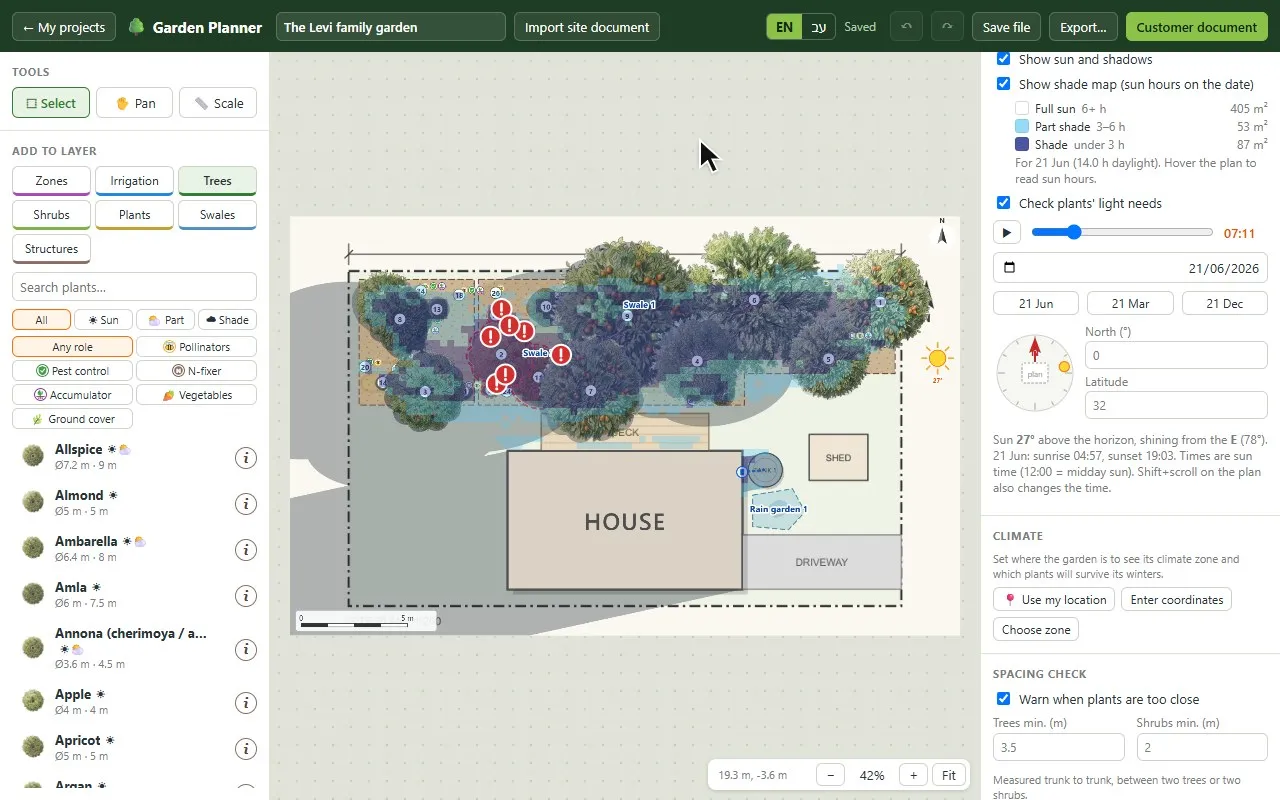
Vegetables want sun more than anything else. Turn on the shadows and move through the day, or open the shade map: it colours the ground by hours of direct sun on the date you choose – full sun (6 hours or more), part shade (3–6 hours) and shade. The house, fences and trees cast their real shadows, so you can see whether the corner by the wall is a tomato bed or a place for lettuce.
Raised bed layout, square by square
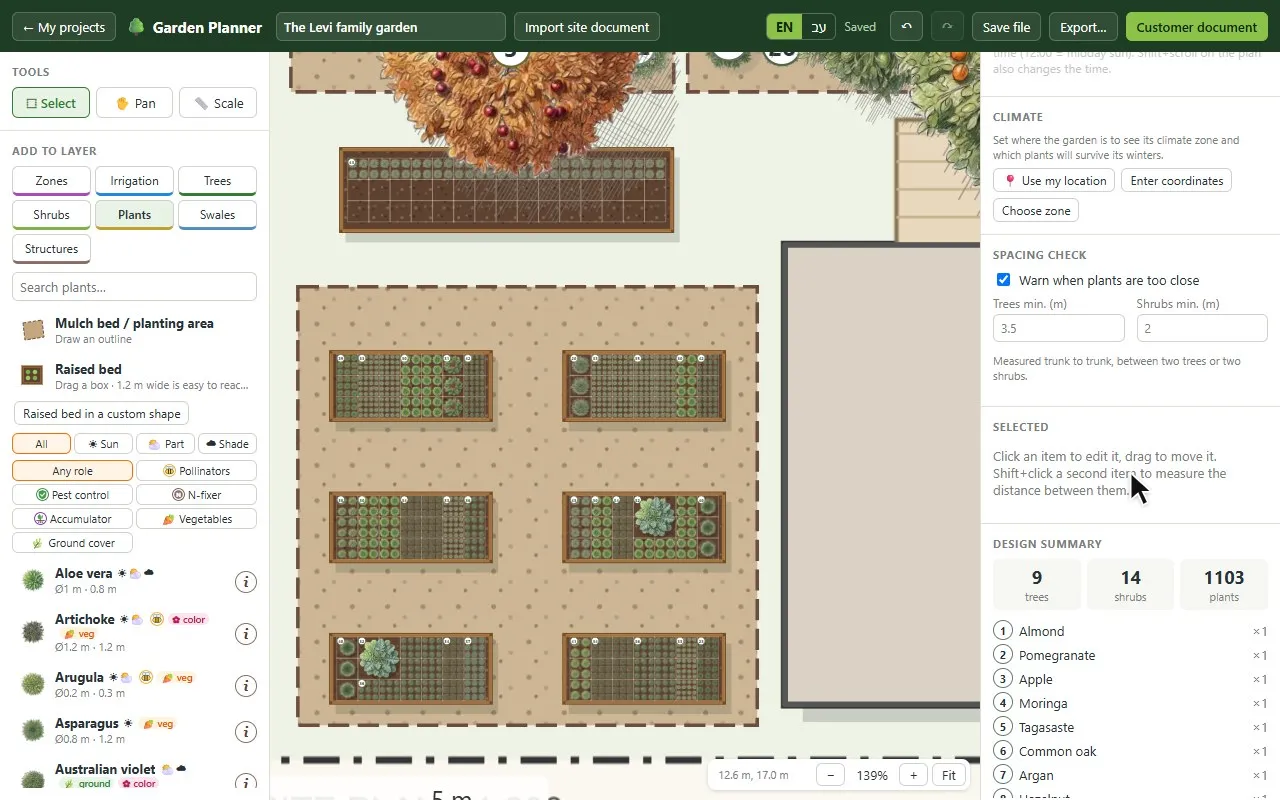
Drag a raised bed onto the plan at its real size – 1.2 m wide is easy to reach across – and plant it the square-foot way. The vegetables you can plant this month come first in the list; drag across the bed to fill it. Or draw a planting area and let the planner lay it out: rows in pairs with paths between them, pollinator flowers at the ends and pest-repelling plants in the middle.
Good and bad neighbours
Companion planting is built in. As you place each vegetable, the planner points out the neighbours that help it and warns about the ones gardeners keep apart, so you can move a crop before it goes in the ground rather than after it struggles.
Plan the next season
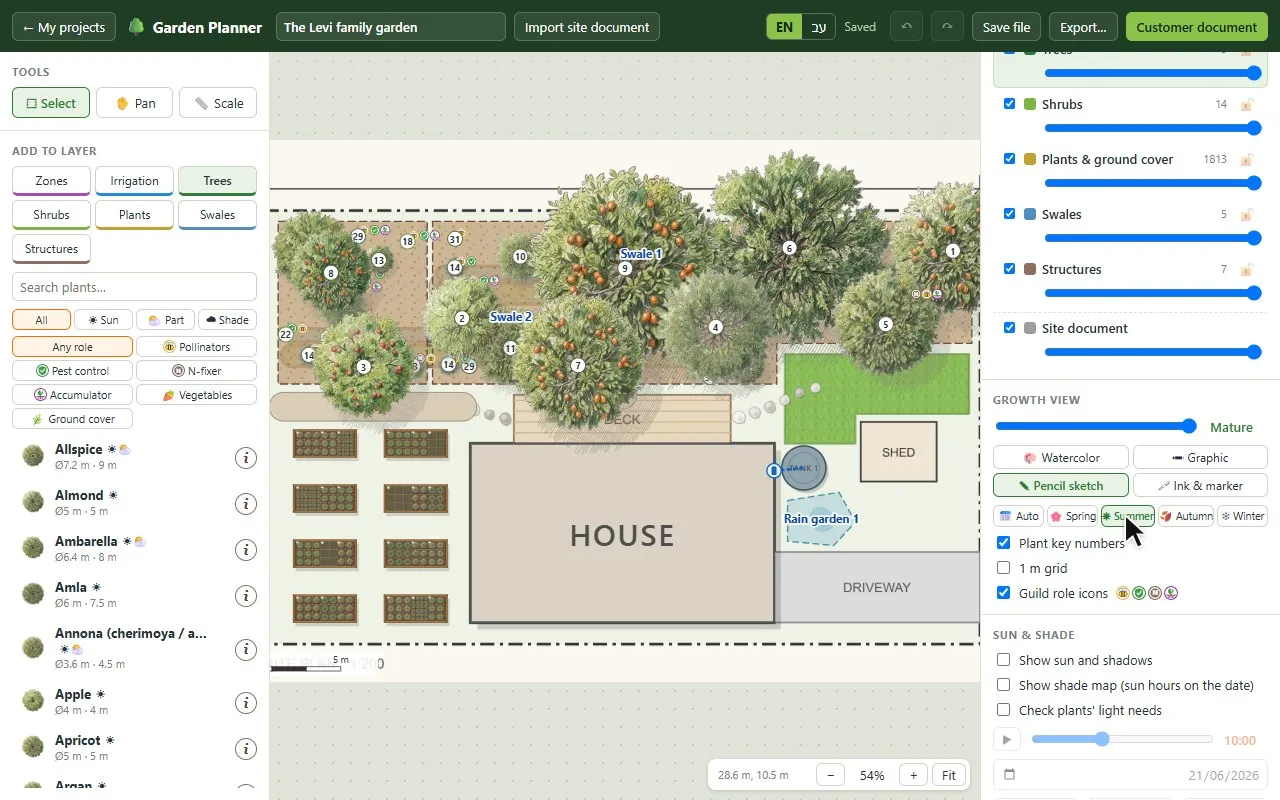
Each raised bed keeps a Summer and a Winter layout. Change the month to see what can be sown next, and decide what replaces each crop once it is harvested – a simple way to rotate crops and keep the beds full all year.
Drip lines and a parts list
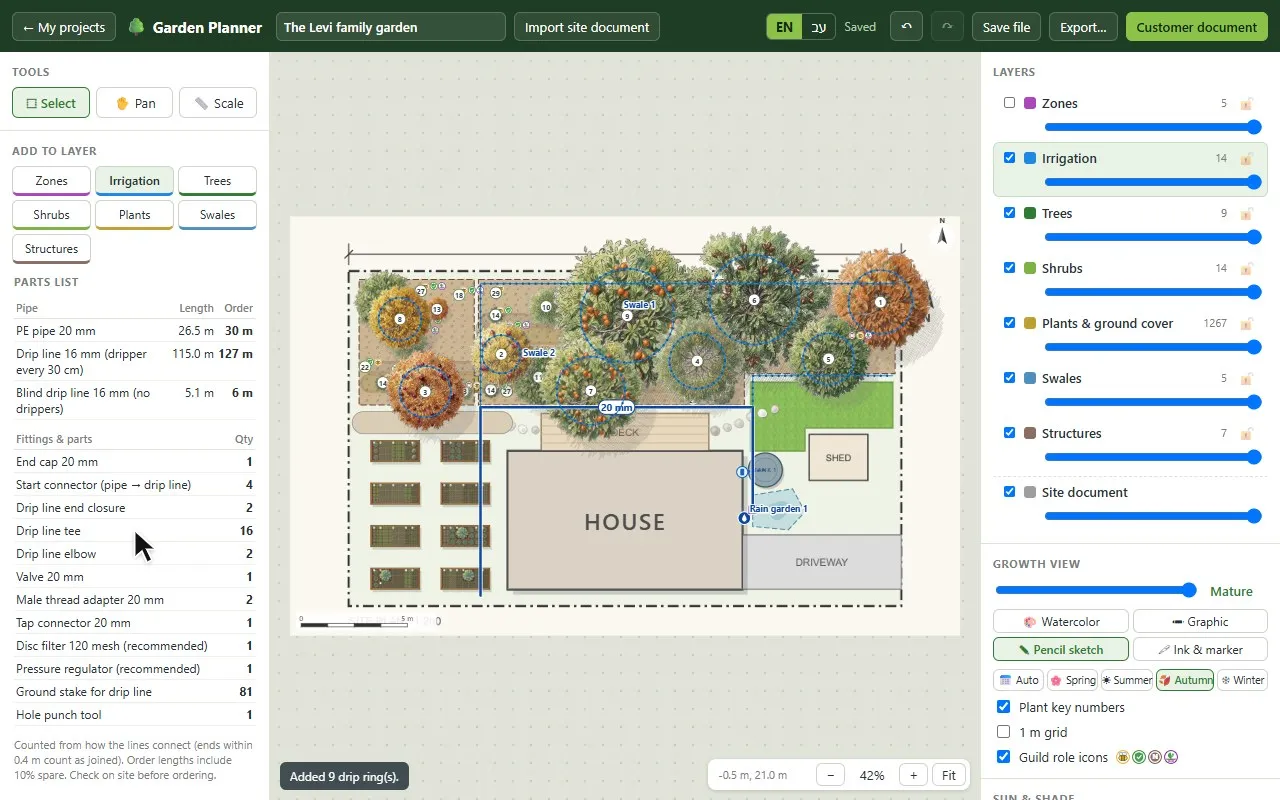
Give each bed a drip line from the tap, with a valve and a filter where they belong. The planner counts the pipe lengths and the fittings – tees, elbows, end caps, start connectors – into a parts list you can take to the shop.
Climate, greenhouse and compost
Set where the garden is and every plant is checked against the local climate, so you see which crops suit your winters and summers. A greenhouse for seedlings, a compost bin and paths between the beds are all on the structures list.
How it works, in four steps
- Bring in your plot: import a site plan, a photo or a Google Earth outline – or just enter its width and depth.
- Turn on the shade map and find the part of the plot with six hours of sun or more.
- Draw raised beds there and fill them with this month’s vegetables, or let the planner lay out a bed for you.
- Add a drip line to each bed, then print the plan or send a view-only link.
Questions about vegetable garden layout
How do I lay out a vegetable garden?
Start with the sun: most vegetables need six or more hours of direct sun a day, so put the beds in the sunniest part of the plot, away from the shade of trees and buildings. Keep beds narrow enough to reach the middle without stepping on the soil (about 1.2 m), leave paths of 40–60 cm between them, and put the beds you visit most close to the kitchen door.
How big should a raised bed be?
About 1.2 m (4 ft) wide is the usual choice, because you can reach the centre from both sides. The length depends on your space – 2 to 3 m is easy to build and to walk around. A depth of 25–30 cm suits most vegetables; carrots and parsnips like a little more.
Which way should vegetable rows face?
North–south rows usually get the most even light, because the sun reaches both sides of the row during the day. Put tall crops such as tomatoes, corn or climbing beans where their shadow falls off the bed: on the north side in the northern hemisphere, on the south side in the southern.
What is companion planting?
Growing plants side by side that help each other – flowers that bring pollinators and pest-eating insects, herbs whose scent confuses pests – and keeping apart the ones that compete or share diseases. The planner points out good and bad neighbours as you place each vegetable.
Is this vegetable garden planner free?
Yes. The Free plan is free forever, with three projects. During the beta every account also gets the Pro tools for free; paid plans with more projects open after the beta.
Further reading on the blog
Planning a different kind of garden?
Plan this season’s beds tonight
Draw your plot, find the sun and fill the first raised bed in a few minutes. Your plan is saved to your account and opens on any computer.