
No-Dig Raised Beds: How to Build Them and Grow Vegetables
How to build a no-dig raised bed for vegetables: size, frame, cardboard and compost layers, planting without digging, feeding, weeds and drip in hot summers.
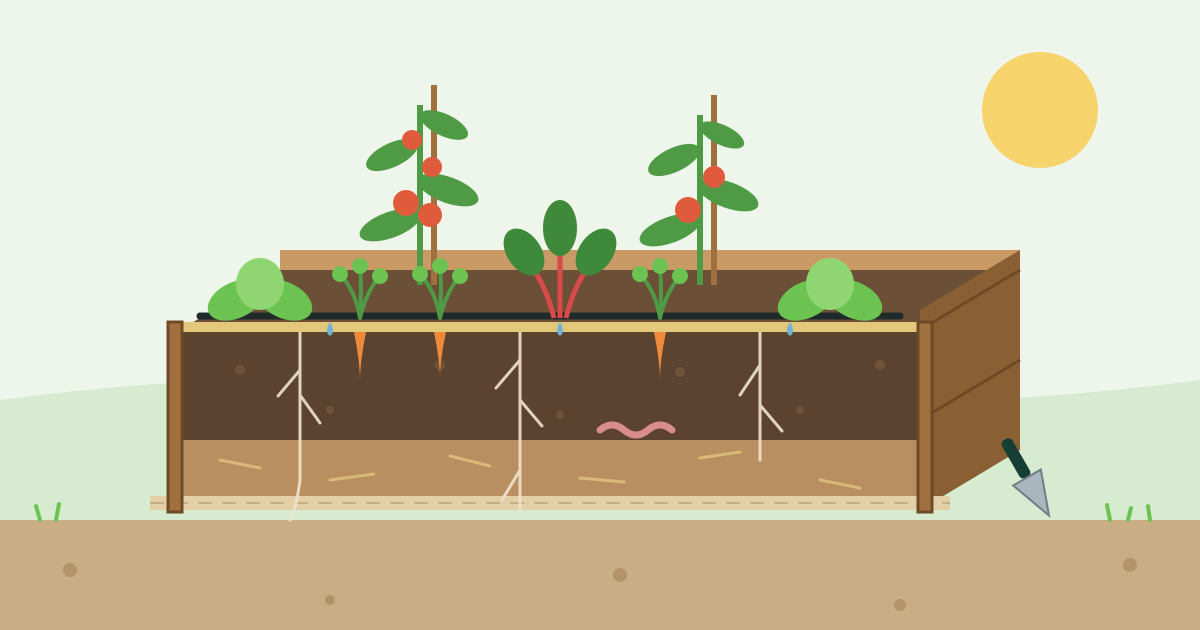
A no-dig raised bed is a vegetable bed you build on top of the ground instead of digging into it: you cut the weeds down, cover them with cardboard, fill a low frame with compost, and plant straight into it. After that you never turn the soil. You feed it from above with a thin layer of compost every year and keep it covered with plants or mulch, and the worms, fungi and roots do the digging for you. The result is a bed with fewer weeds, soil that gets better every year, and much less work.
What no-dig (no-till) means, and why soil life likes it
"No-dig" and "no-till" mean the same thing in a garden: you don't turn, fork or rototill the soil. You add organic matter on the surface and let soil life pull it down.
Digging does several things that work against you:
- It breaks up the soil's structure. Healthy soil is made of crumbs (aggregates) glued together by roots, fungi and microbes, with pores between them for air and water. Turning the soil smashes these crumbs, and the extra air speeds up the breakdown of organic matter, so the soil loses carbon faster. Researchers at the Rodale Institute name both as the main ways tillage harms soil health.
- It tears the fungal network. Mycorrhizal fungi spread fine threads (hyphae) through the soil that carry water and phosphorus to plant roots. Every time you dig, you cut them and they have to grow back.
- It wakes up weed seeds. Every soil holds a bank of weed seeds waiting for light. Digging brings a fresh batch to the surface. In a no-dig bed they stay buried and dark.
You can read more about the living part of the soil in the soil food web.
What about yield? The best-known trial is Charles Dowding's at Homeacres in England, where he has grown the same crops side by side in dug and undug beds, with the same compost, since 2013. He reports roughly 10% more harvest from the no-dig bed in most years, while independent looks at his numbers find the difference too small to be statistically certain. The fair summary: no-dig gives at least the same harvest for much less work, with fewer weeds and better soil. That alone makes it worth doing.
Does a no-dig bed need to be raised?
No. Dowding's own beds are just compost spread on the ground, with wooden sides at most. But a frame helps in many gardens:
- On heavy clay, rock or poor fill, a raised bed gives roots a good layer of soil from the first day, while the ground below slowly improves.
- It keeps the compost in place, away from paths, and keeps creeping grass out at the edges.
- It warms up faster in late winter, and drains well in a wet winter.
- It's easier on your back. A bed 40–60 cm high is much easier to work for older gardeners or anyone who finds bending hard.
The downside is that a raised bed dries out faster than the ground, because its sides are exposed to sun and wind too. In a hot, dry summer that matters, so plan the watering from the start (see below).
Size, height and materials
| Recommendation | Why | |
|---|---|---|
| Width | Up to 1.2 m; 60–75 cm against a wall or fence | You can reach the middle without stepping on the soil |
| Length | Whatever fits; 2.4–3.6 m is common | Very long beds make you walk around a lot |
| Height | 20–30 cm for most gardens; 40–60 cm or more on rock, concrete, or to save your back | Most vegetables need at least 25–30 cm of good soil |
| Paths | 45–60 cm, mulched | Room for a wheelbarrow or a kneeling pad |
| Bottom | Open to the ground | Roots and worms move freely between bed and soil |
For the frame, use untreated wood, galvanised steel, stone or concrete blocks. Untreated softwood lasts only a few years in the ground, so thicker boards and rot-resistant wood last longer. Avoid old railway sleepers (they hold creosote) and old pressure-treated wood, which may contain arsenic. Galvanised steel beds heat up in full sun, but they last for many years; in a hot climate, choose a light colour or shade the sides with plants.
Building the bed, layer by layer
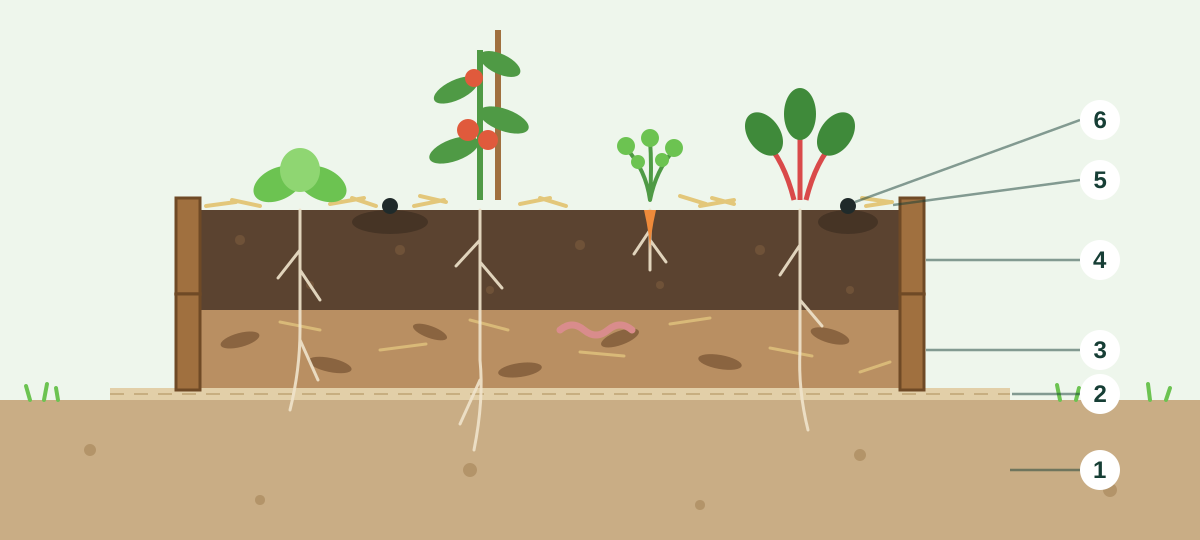
- Choose the sunniest spot. Fruiting vegetables such as tomatoes and peppers need at least 6 hours of direct sun; leafy greens manage with less. Close to the kitchen door is best.
- Cut, don't dig. Mow or cut the weeds and grass as low as you can and leave them where they fall. Dig out only the crowns of big, deep-rooted weeds such as docks and brambles.
- Set the frame on the ground and level it.
- Lay cardboard. Use plain brown cardboard, remove all tape and plastic labels, and overlap the sheets by about 15 cm so no light gets through the gaps. Soak it well. On ground full of grass, use two layers, and run it under the frame and out into the path.
- Add coarse material if you have it (optional): dry leaves, straw, spent plants, shredded prunings. This is the "lasagna" layer that saves compost (see the options below).
- Fill the top 10–15 cm with compost. Use well-made, finished compost: dark, crumbly and smelling of earth. You can plant into it the same day.
- Lay the drip lines on the compost before planting.
- Plant, then mulch around the plants with straw or chopped leaves.
Three ways to fill the bed
- Compost on cardboard (the Dowding way). Cardboard, then 10–15 cm of compost, then plant. Ready the same day, the fewest problems, but you need the most compost.
- Lasagna bed (sheet composting). Alternate "browns" (dry leaves, straw, shredded paper) with "greens" (grass clippings, kitchen scraps, fresh plant waste) over the cardboard, and finish with a few centimetres of compost. It costs almost nothing, but it shrinks a lot as it breaks down and takes a few months to settle, so build it a season before you want to plant. In Israel, a lasagna bed built in autumn gets the winter rain to help it break down and is ready in spring.
- Hügelkultur (logs at the bottom). In a tall bed, 60 cm or more, you can fill the lower part with logs and thick branches, then prunings, then soil and compost on top. The wood holds water like a sponge and saves a lot of soil. Use untreated, unpainted wood that is already partly rotten, and keep it at least 30 cm below the surface: while wood breaks down, the microbes doing the work take up nitrogen from the soil right around it. Hügelkultur beds are popular, but there are few proper studies of them, so treat the benefits as promising rather than proven.
Planting without digging
In a no-dig bed you open only as much soil as each plant needs:
- Seedlings: pull the mulch aside, make a hole with a trowel or your fingers, plant, firm the compost around the roots and water.
- Seeds: draw a shallow line in the compost with a stick, sow, cover lightly, and keep the line moist until they come up. Fine seeds such as carrots do best in compost without coarse mulch on top.
- At harvest: cut or twist plants off at the surface and leave the roots in the ground. They rot and leave channels for air, water and the next crop's roots.
Keep the soil covered
Bare soil in a hot sun bakes, crusts and loses its life. Keep every bed covered:
- Replant straight away. As one crop finishes, the next goes in, often seedlings you have raised in trays so the bed is never empty.
- Mulch with straw, chopped leaves or dry grass when nothing is growing, and between plants in summer. More in mulch in the garden.
- Grow a cover crop in a bed you won't use for a while, such as fava beans (Vicia faba), peas or vetch with oats in winter. Cut it at the surface before it sets seed, leave it on the bed as mulch, and plant through it.
Feeding the bed
Once the bed is built, feeding is simple: spread a thin layer of compost on top, about 2.5–5 cm a year, and let the worms take it down. Don't mix it in. Dowding uses about 2.5 cm a year on his established beds; the RHS suggests about 5 cm. Hungry crops such as tomatoes and squash can have a little more around them.
Add the compost close to when you plant rather than months before, so heavy rain doesn't wash the nutrients away. In Israel that usually means once before the winter vegetables in autumn and, if you have enough, a little before the summer crops in spring. Homemade ferments and liquid feeds such as those in Korean Natural Farming can add to the compost, but they don't replace it.
Avoid fresh manure, which can burn roots and carry disease, and wood chips mixed into the soil; wood chips belong on the paths.
Weeds, water and heat: no-dig in Israel
Most no-dig advice comes from England, where it rains in summer. In a Mediterranean or semi-arid climate, three things need extra care.
Grass that comes through cardboard
Cardboard and compost deal with annual weeds well. Deep-rooted perennial weeds are harder, and in Israel two are the worst: Bermuda grass (Cynodon dactylon) and purple nutsedge (Cyperus rotundus). Both can push through or around cardboard and come back once it rots, which takes a few months. Dowding says creeping grasses need 9–15 months of complete darkness to die.
- Dig out as many runners and tubers as you can before you lay the cardboard. This is the one time digging is worth it.
- Use two layers of cardboard, and lay it wider than the frame.
- Keep the edges clean: a mulched path, a strip of cardboard, or a frame sunk a few centimetres into the ground.
- Pull every new shoot as soon as you see it. In loose compost they come out easily, and each one you pull weakens the plant.
Water
A raised bed full of compost drains fast and dries from the sides as well as the top. In an Israeli summer it may need water every day.
- Use drip irrigation on a timer. Lay lines about 30 cm apart on the compost, with drippers every 20–30 cm, and cover them with mulch. Mulch alone can cut watering by a third or more.
- Water early in the morning, long enough to wet the whole depth of the bed, rather than a little every few hours.
- Watch for salt. If leaf edges brown and a white crust forms, give the bed an occasional long watering to wash the salts down, and use winter rain to do the same.
Two seasons, and summer shade
In most of Israel the vegetable year has two main seasons:
- Winter (planting in September–November): lettuce, chard, spinach, cabbage, broccoli, cauliflower, peas, fava beans, carrots, beetroot, onions, garlic and herbs such as parsley and coriander. Winter rain does part of the watering.
- Summer (planting in March–May): tomatoes, peppers, eggplants, cucumbers, zucchini, okra, melons, sweet potatoes and basil.
In July and August, a shade cloth of about 30–40% over the bed helps leafy greens and keeps the compost from baking. Tall crops on a trellis on the north side give the rest of the bed afternoon shade without blocking the sun.
Common mistakes
- Beds too wide. If you have to step in to reach the middle, you compact the soil you're building.
- Filling with unfinished compost. Compost that is still warm, smells sour or is full of chunks takes nitrogen from the plants and can burn them.
- Leaving the bed bare between crops or over the summer.
- Thin cardboard over Bermuda grass, or cardboard with plastic tape and glossy labels.
- Forgetting that the bed settles. Lasagna and hügel beds can drop by a third or more in the first year; top them up.
- Watering little and often. Only the top few centimetres get wet, and the roots stay shallow.
- Treated or painted wood in the frame or in a hügel bed.
Planning no-dig raised beds in Megumi Planner
Megumi Planner has a raised bed tool on the Plants layer. You drag a box (or draw a custom shape) to scale on your site plan, then choose its height (20–80 cm) and frame: wood, stone or blocks, galvanised metal, or a mounded bed with no frame.
For each bed, the planner tells you:
- How much soil and compost it takes to fill, in litres and 50-litre bags.
- A warning when the bed is wider than 1.2 m, or when a frameless mound is too tall to hold its shape, plus a hügelkultur tip for beds 60 cm or taller.
- How many hours of sun it gets in each month, with the shade of your house and trees included, and which squares get less than 6 hours.
Inside the bed, you plant on a grid of 30 cm squares, as in square foot gardening. The planner shows which vegetables are in season for the month you choose, can fill the free squares with crops that grow well together, warns about bad neighbours, and keeps separate summer and winter layouts for the same bed. One click adds drip lines along each row of squares, ready to join to your main irrigation line.
All the tools for raised beds and vegetables are on one page: the vegetable garden planner.
Frequently asked questions
Can I make a no-dig bed on heavy clay?
Yes, and that's where it helps most. Don't dig the clay. Lay cardboard over it and build the bed on top; roots and worms will slowly open up the clay below.
Can I put a raised bed on concrete or paving?
Yes, but make it at least 30–40 cm deep, since roots can't go further down, and leave gaps at the bottom of the frame for water to drain. Skip the cardboard; there are no weeds to stop.
Can I fill it with bagged potting soil?
You can, but a potting mix with a lot of peat dries out fast and is hard to wet again in summer. Finished compost, or compost mixed with good topsoil, holds water better and feeds the bed.
Sources
- Dig/No Dig Trial 2013–18 – Charles Dowding, Homeacres
- Starting a new allotment with weeds – Charles Dowding
- My advice for keeping on top of weeds – Charles Dowding
- No-dig gardening – Royal Horticultural Society
- Variations in soil health indicators in the Vegetable Systems Trial – Gladis Zinati and others, Rodale Institute
- Sheet mulching and lasagna composting with cardboard – Oregon State University Extension
- Create new garden beds with sheet composting and sheet mulching – Penn State Extension
- No-Dig Garden Beds – University of Florida IFAS Extension
- Raised Bed Gardening – Utah State University Extension
- Raised Garden Bed Dimensions – University of Georgia Extension
- Sustainable landscapes: creating a hugelkultur – Oklahoma State University Extension
- Controlling weeds by cultivating and mulching – Clemson University Home & Garden Information Center
- חיפוי קרקע בגינת הנוי – Israel Ministry of Agriculture (Hebrew)
Keep reading
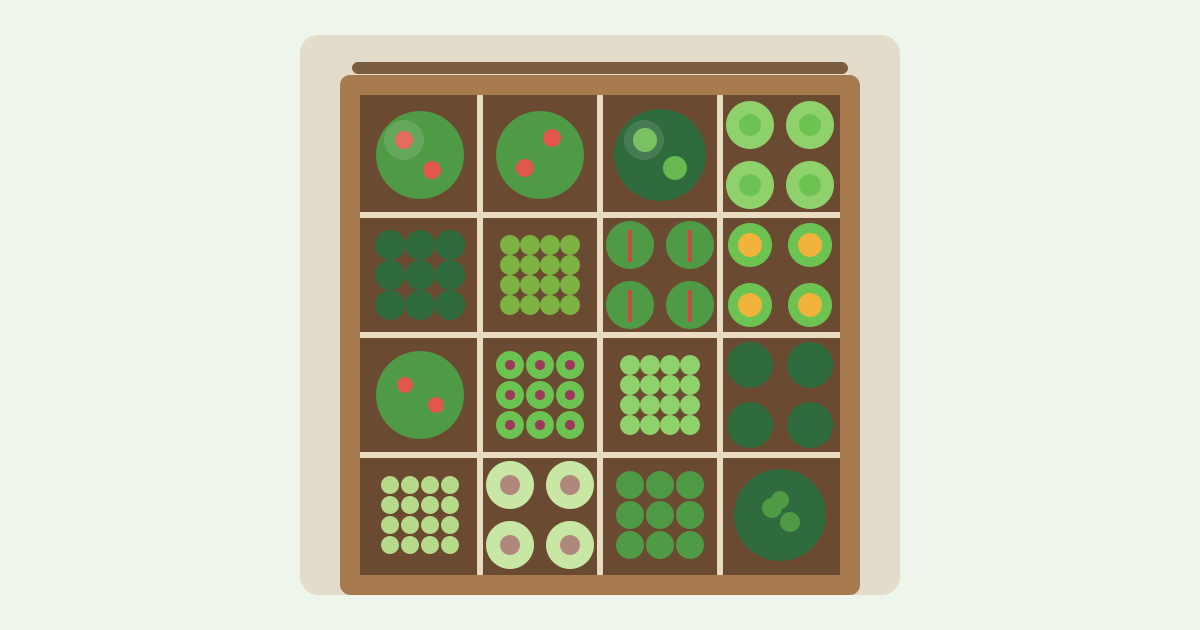
Square Foot Gardening: Grow More Vegetables in a Small Bed
How square foot gardening works: the grid, how many plants go in each square, the soil mix, a planting chart, and how to adapt the method to a hot, dry summer.
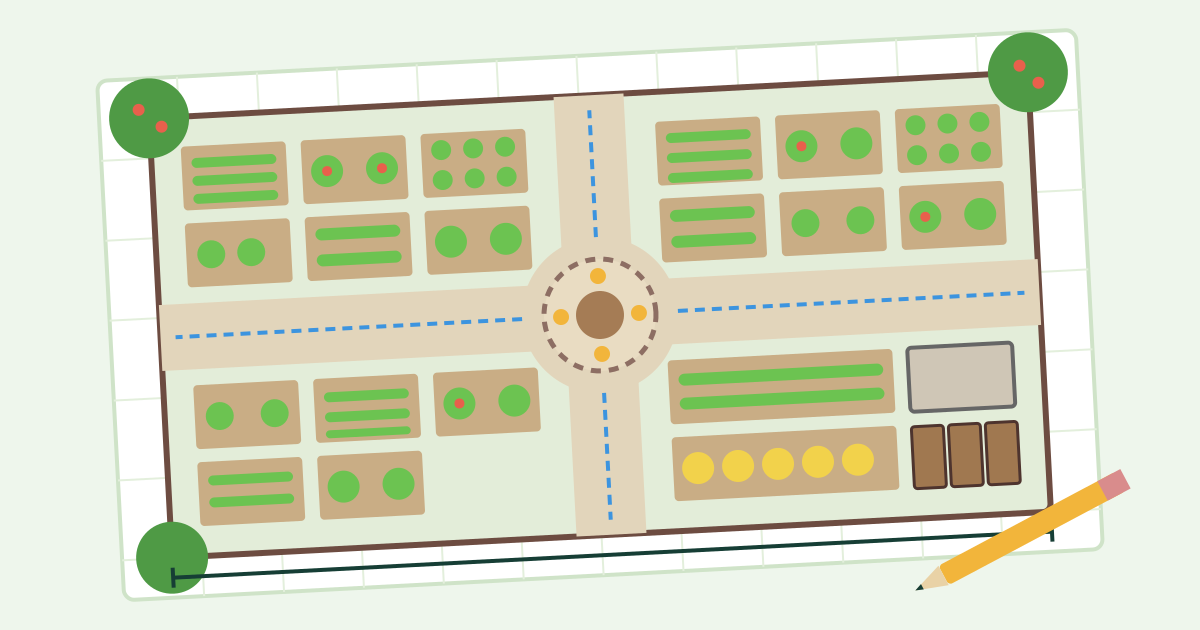
How to Plan a Community Garden, Step by Step
How to plan a community garden: the group, the land and permits, the site survey, plots and shared areas, water, budget and rules – and one shared plan for all.
How to Plan a Small Garden, Step by Step
Plan a small garden that works: read the sun and shade, draw it to scale, set priorities, grow upwards, choose compact plants and water well in a hot summer.